



Škrlatica (2,740 m) is Slovenia’s second-highest mountain, surpassed only by Triglav. Many hikers consider it the most beautiful peak in the Julian Alps. While Triglav attracts the biggest crowds, Škrlatica offers a quieter experience, wilder scenery, and breathtaking views across almost the entire Julian Alps.
Although it isn’t particularly technical, this is a long and physically demanding hike. Starting from the Vrata Valley means tackling around 1,740 metres of elevation gain and spending the entire day on the mountain.
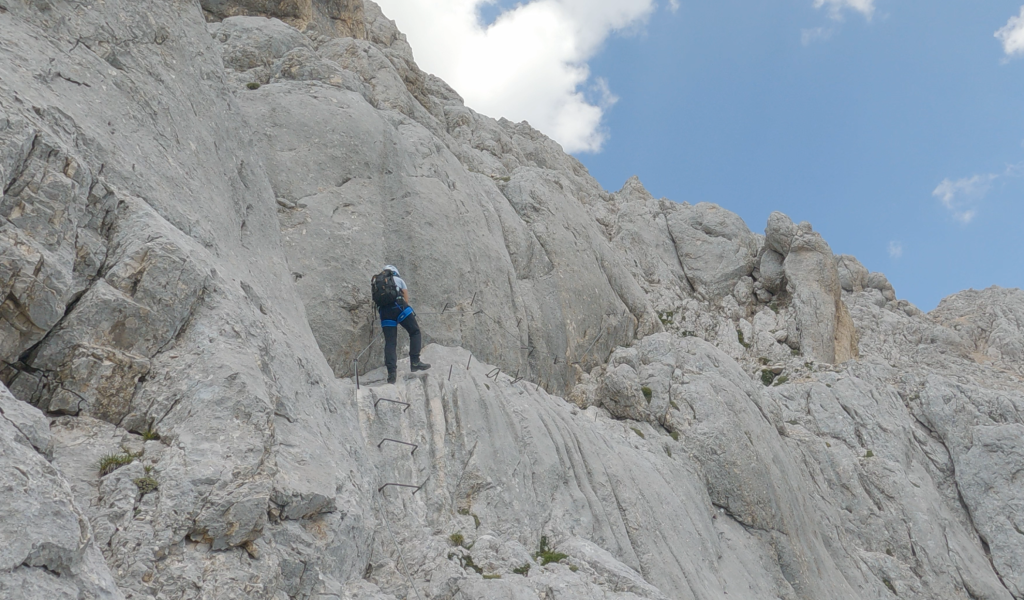
While Škrlatica is not a technical climbing route, the final section crosses steep and exposed terrain protected with fixed cables and steel pegs. Combined with the significant elevation gain, this makes it a demanding alpine hike.
Is Škrlatica Difficult?
Yes, very much so—but not because of climbing.
The real challenge is the length of the route and the elevation gain. If you’re doing it as a day hike, you’ll climb approximately 1,740 vertical metres on the way up, and descend the same distance on the way back.
Physically, Škrlatica is no easy objective, and good fitness is essential.
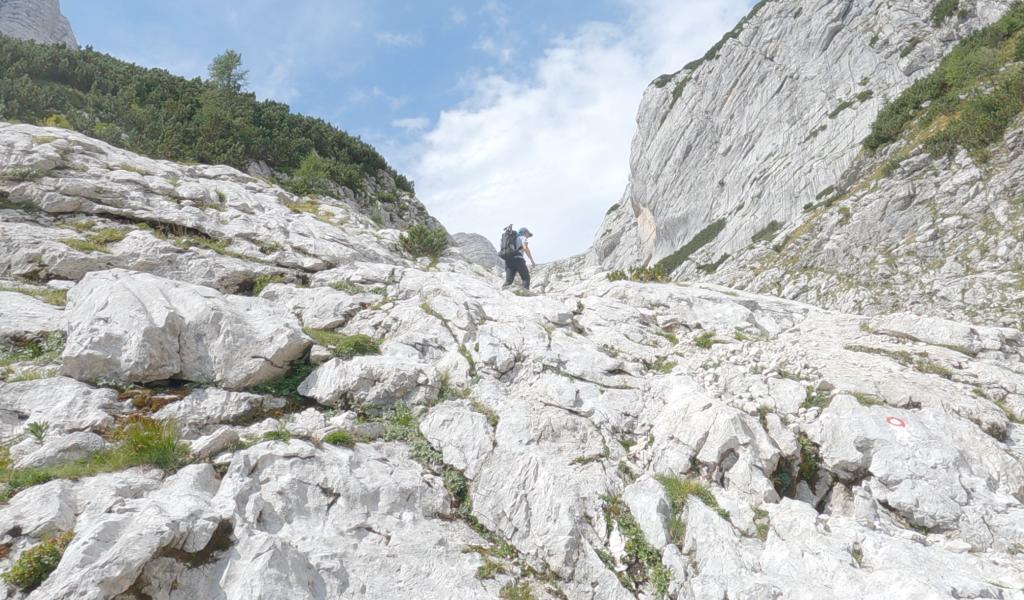
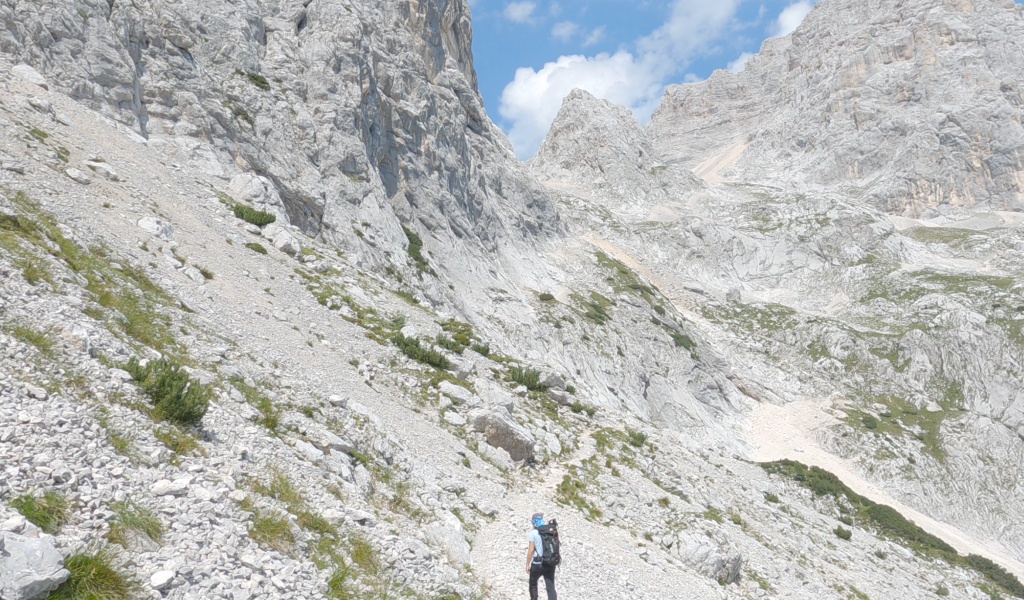
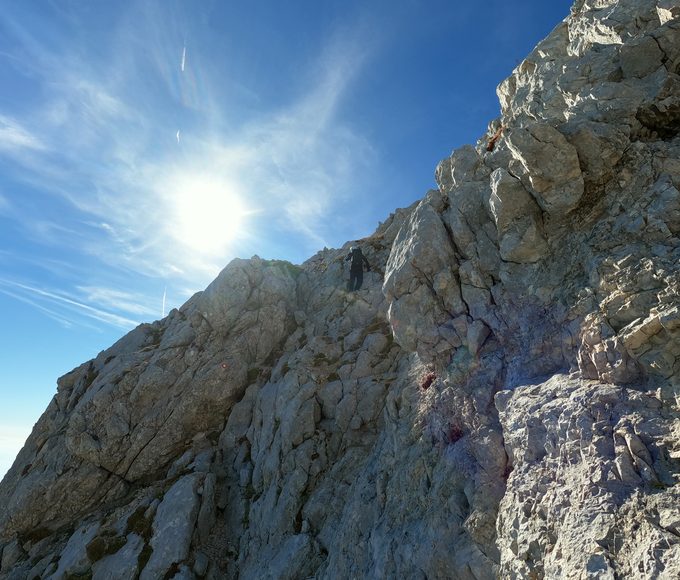
Most of the trail follows a well-marked alpine hiking route through classic limestone terrain, with plenty of scree slopes along the way. Near the summit, the route enters steep rocky terrain protected by fixed cables and steel pegs. Although this section requires caution, hikers with previous Alpine experience should have no major difficulties.
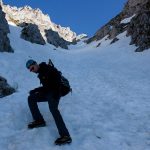
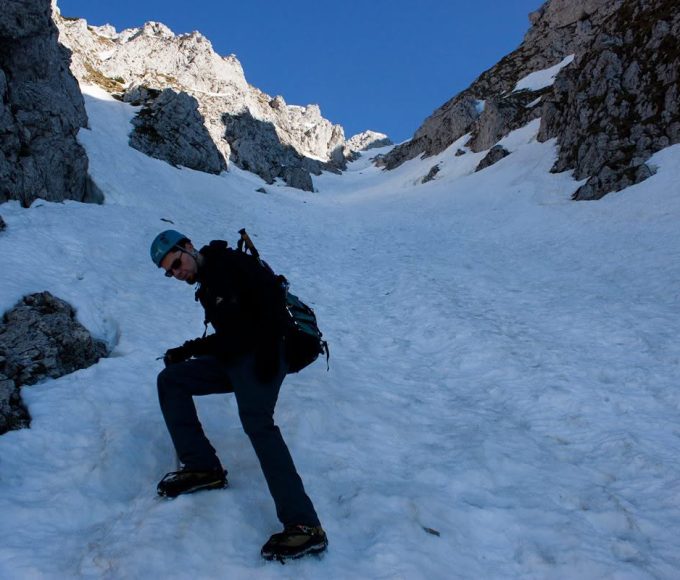
If snow is still present on the mountain, the situation changes completely. In those conditions, Škrlatica is no longer suitable for the average hiker.
Starting from the Vrata Valley
The most popular route begins at Aljaž Lodge (Aljažev dom) in the Vrata Valley.
Aljaž Lodge – Useful Information
Accommodation: Approximately €30–35 for a bed in a shared dormitory. Private rooms cost more, depending on the room type and season. Check current prices before your trip.
Food & Drinks (2026 prices):
- Breakfast: around €8
- Espresso: around €2.50
- Ričet (traditional barley stew): around €10
- Isotonic-style Radler: around €4
Discounts: Members of the Croatian Mountaineering Association (HPS), the Alpine Association of Slovenia (PZS), and other UIAA-affiliated organizations usually receive around 50% discount. Bring your membership card.
Reservations: Highly recommended during July and August.
Bed linen: Included.
Parking: If you’re staying overnight at Aljaž Lodge, you’re allowed to drive through the barrier and park next to the hut (provided there’s space available).
Vehicle access to the Vrata Valley is limited to 195 cars, and parking is paid. Between 15 June and 15 September, parking costs €20 per day for passenger cars. Outside that period, different regulations apply.
If you’re not staying overnight, you’ll normally park before the barrier and either walk or take the shuttle bus to the hut.
Phone: +386 51 665 738
Tip: During summer weekends the parking fills up extremely quickly. Arriving early—or even better, spending the night at the lodge before your ascent—is strongly recommended. By around 8:00 a.m., the parking is often already full.
The Ascent to Škrlatica
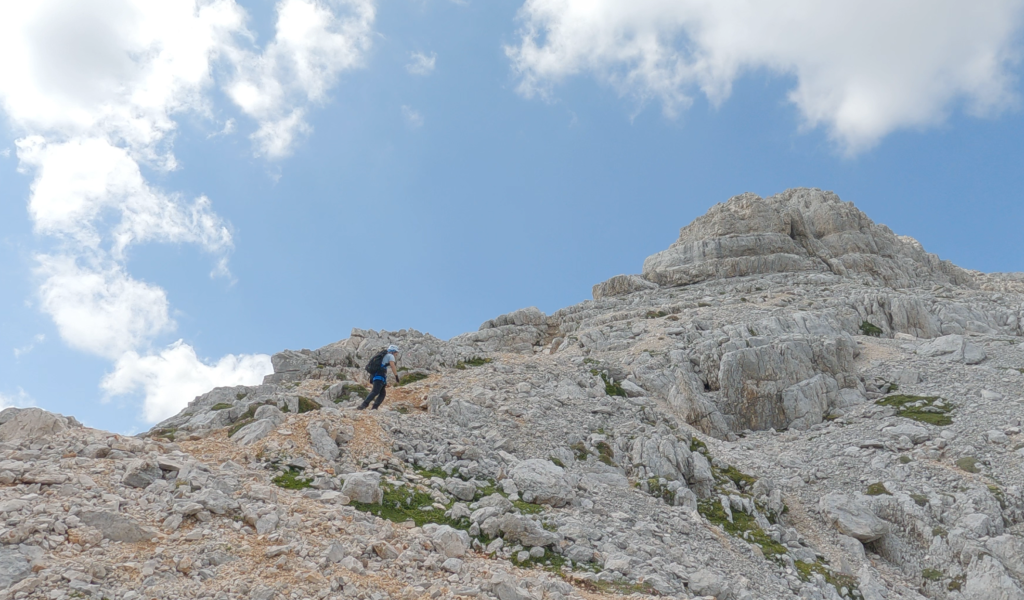
The trail begins in the forest and gains elevation surprisingly quickly. As you climb higher, the terrain becomes increasingly rocky and impressive views of the surrounding Julian Alps begin to open up.
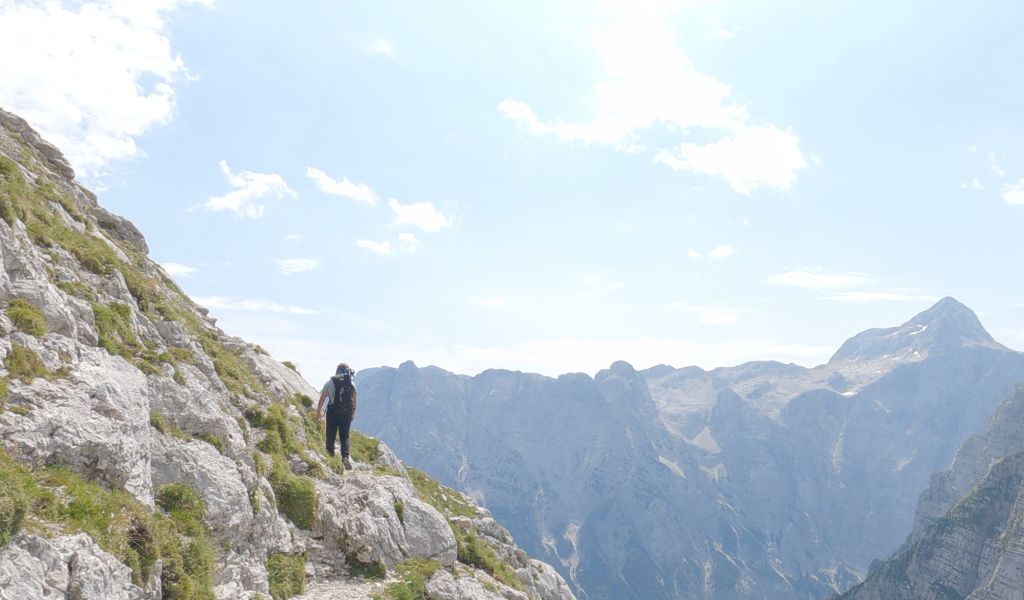
As you approach the upper part of the route, the landscape becomes harsher and more dramatic, giving you that unmistakable feeling of being in true alpine terrain—the reason so many people keep returning to these mountains.
There are no mountain huts along the route, so you’ll need to carry all your food, water, and equipment from the very beginning.
In practical terms, during summer you’ll want to carry at least three litres of water unless you enjoy hiking while completely dehydrated. Since that’s already about three kilograms of extra weight, it’s worth packing efficiently and relying on energy bars and a couple of sandwiches, depending on your appetite.
The only shelter along the route is Bivouac IV na Rušju, located at approximately 1,992 metres above sea level. It can be reached in about 2 hours and 50 minutes from Aljaž Lodge. Keep in mind that this is an emergency shelter, not a staffed mountain hut with food, drinks, or accommodation services.

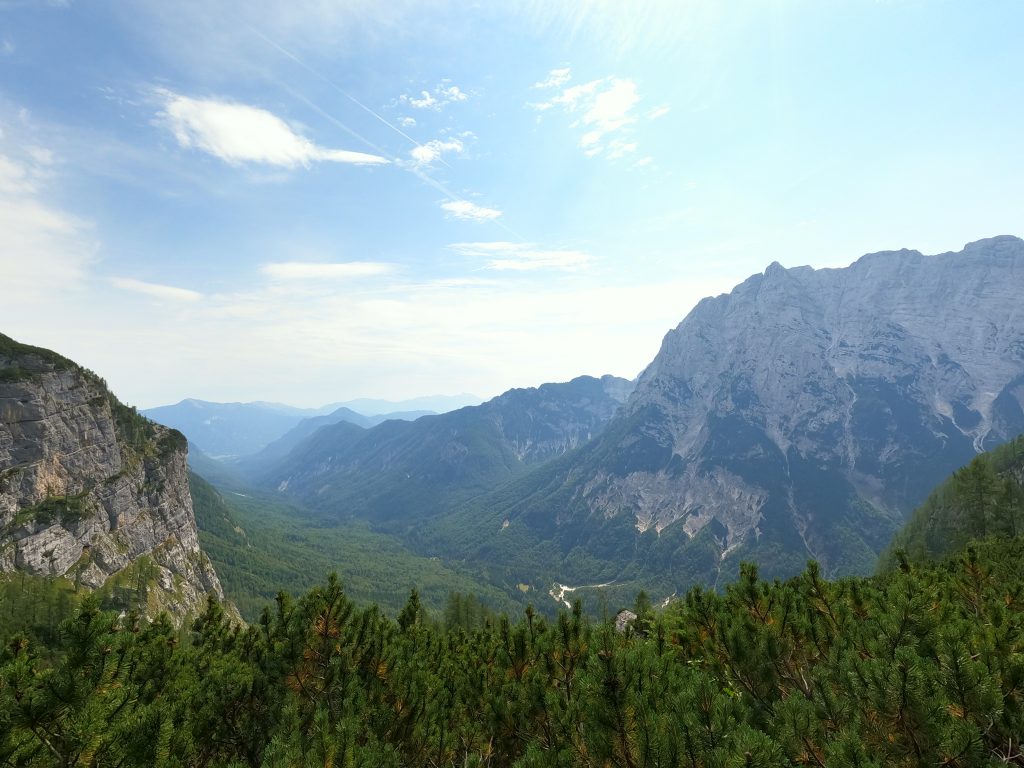

There are no mountain huts along the route, so you’ll need to carry all your food, water, and equipment from the very beginning.
In practical terms, during summer you’ll want to carry at least three litres of water unless you enjoy hiking while completely dehydrated. Since that’s already about three kilograms of extra weight, it’s worth packing efficiently and relying on energy bars and a couple of sandwiches, depending on your appetite.
The only shelter along the route is Bivouac IV na Rušju, located at approximately 1,992 metres above sea level. It can be reached in about 2 hours and 50 minutes from Aljaž Lodge. Keep in mind that this is an emergency shelter, not a staffed mountain hut with food, drinks, or accommodation services.
What Is the Final Ascent to Škrlatica Like?
After crossing the large scree slope, the route enters steep rocky terrain.
The most exposed sections are protected with fixed steel cables and pegs, and in places the slope becomes quite steep.
The biggest challenge, however, is usually not the terrain—it’s fatigue.
Although Škrlatica isn’t a technical climbing route, the final section is steep, exposed, and demands concentration. Combined with the significant elevation gain, this is one of Slovenia’s most demanding hiking routes.
It’s well worth starting as early as possible. An early start gives you enough time to return safely before the afternoon thunderstorms that often develop in the Julian Alps.
The earlier, the better. Starting at 5 or 6 a.m. is ideal if you want to be back in the valley by mid-afternoon.
We left Zagreb at 5:00 a.m., reached Aljaž Lodge around 8:30, and by the time we started hiking, we were among the last people heading up the mountain that day.


Map of the route to Škrlatica
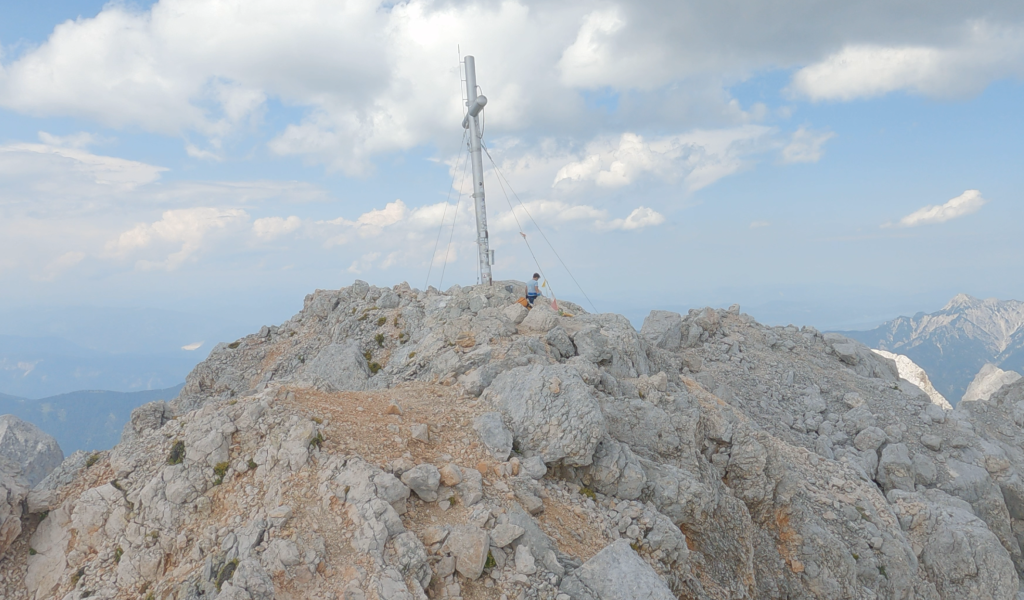
The Summit
One of the highlights of Škrlatica is that, despite its popularity among experienced hikers, it rarely feels crowded.
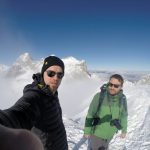
When we reached the summit, there were only the two of us—and a paraglider, who had a far more comfortable trip back to the valley than we did.
Ibex are also a common sight in this part of the Julian Alps, so keep an eye on the surrounding cliffs.
Views from the Summit
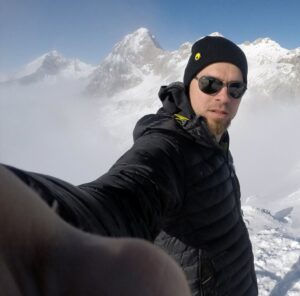
Besides being an excellent workout, the breathtaking panorama is one of the main reasons hikers love Škrlatica.
The summit offers one of the finest views in Slovenia.
Perhaps the most impressive sight is Triglav, which looks completely different from here than it does from the surrounding peaks.
On a clear day you can see:
- Triglav
- Razor
- Prisojnik
- Jalovec
- Mangart
- the Vrata Valley
- almost the entire Julian Alps
If the weather cooperates, it’s hard to imagine a better viewpoint.
How Long Does the Hike Take?
Typical hiking times are:
- Aljaž Lodge → Škrlatica: 6–7 hours
- Škrlatica → Aljaž Lodge: around 5 hours
- Total: 10–12 hours, depending on your pace, weather conditions, and the number of breaks.
Very fit hikers moving at a fast pace can complete the route in around 10 hours or slightly less, but most people should plan for a full day in the mountains.
Elevation Gain
Aljaž Lodge sits at approximately 1,000 metres above sea level, while the summit of Škrlatica reaches 2,740 metres.
That means you’ll climb approximately 1,740 metres during the ascent, making this one of the most physically demanding day hikes in Slovenia.
Equipment
Summer
- 30–40 L backpack
- Hiking boots
- At least 3 litres of water (more if you tend to drink a lot)
- Food
- Sunscreen
- Sun hat or cap
- Windproof jacket
- Headlamp
If There’s Still Snow
- Crampons
- Ice axe
- Warm clothing
- Spare gloves
- Helmet
- Solid experience in snow-covered alpine terrain
When Is the Best Time to Climb Škrlatica?
The best conditions are usually between July and September.
Early in the season, snowfields often remain on the upper slopes, while in spring and late autumn the mountain can still have full winter conditions.
As always in the Alps, check both the weather forecast and current trail conditions before setting out.
Škrlatica may not be as famous as Triglav, but many experienced mountaineers consider it the most beautiful peak in the Julian Alps, earning it the nickname “The Queen of the Julian Alps.”
If you’ve already completed a few demanding Alpine hikes and you’re looking for a mountain that will truly test your endurance while rewarding you with one of Slovenia’s finest panoramas, Škrlatica is an outstanding choice.




Leave a comment