



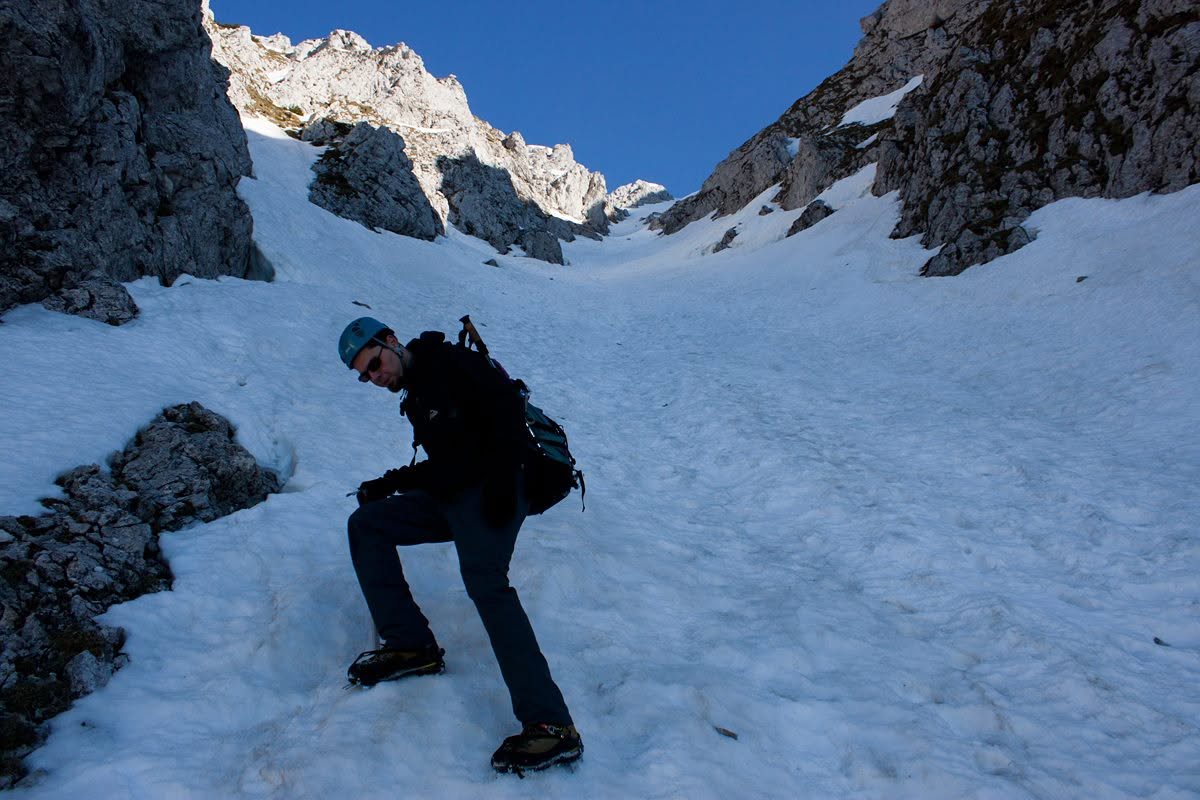
Storžič (2132 m) is the highest peak in the western part of the Kamnik–Savinja Alps in Slovenia, rising just above the town of Tržič. It gets its name from its striking shape – a perfectly formed cone (Slovenian storž) that’s recognizable from every side of the valley. The southern flank is made up of steep grassy slopes and scree, while the northern face drops almost vertically toward the Lomščica valley – and it’s in that northern wall that you’ll find both Žrelo and Peto žrelo, two of the three routes covered in this post.
Thanks to its isolated position and height above the surrounding peaks, Storžič is an exceptional viewpoint: on a clear day the summit offers views over the Ljubljana basin, the Julian Alps with Triglav, the Karavanke range with Stol, Begunjščica and Košuta, and to the east toward the Kalški greben ridge, Grintovec and Krvavec – on especially clear days, even Austria’s Grossglockner is said to be visible.
There are three fundamentally different routes to the summit (setting aside the more technical alpine lines) – ranging from a marked hiking trail, to a semi-via-ferrata ascent, to a genuine alpine gully.
The Normal Route – via Škarjev Rob
The usual, easiest, and most frequently used approach to Storžič runs via Škarjev rob, on the western side. It’s a marked hiking trail that climbs gradually along the western ridge from the Dom pod Storžičem mountain hut (1123 m), through beech forest and across the Jesenje alpine meadow. Unlike Žrelo, there are no technically demanding sections here and no cable protection — it’s a long but technically straightforward trail that many people use for both the ascent and the descent, making it the safest option for less experienced hikers.
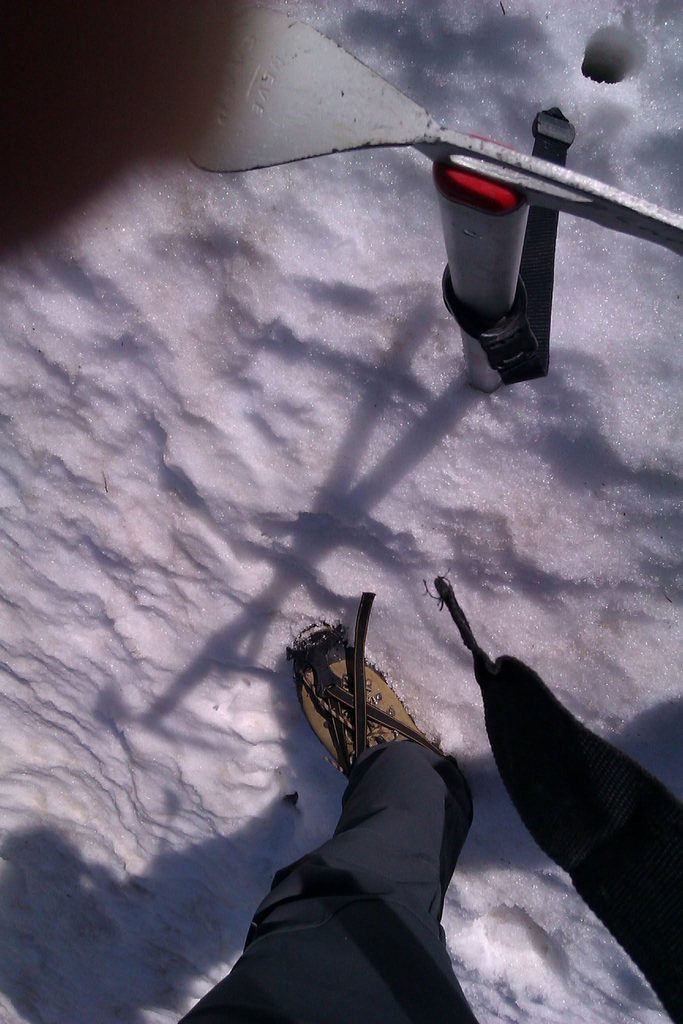
In spring and autumn, patches of snow can still linger, and without crampons and an ice axe you won’t get through the final stretch of the route.
It’s a beautiful, technically undemanding trail.
The Ascent Through Žrelo
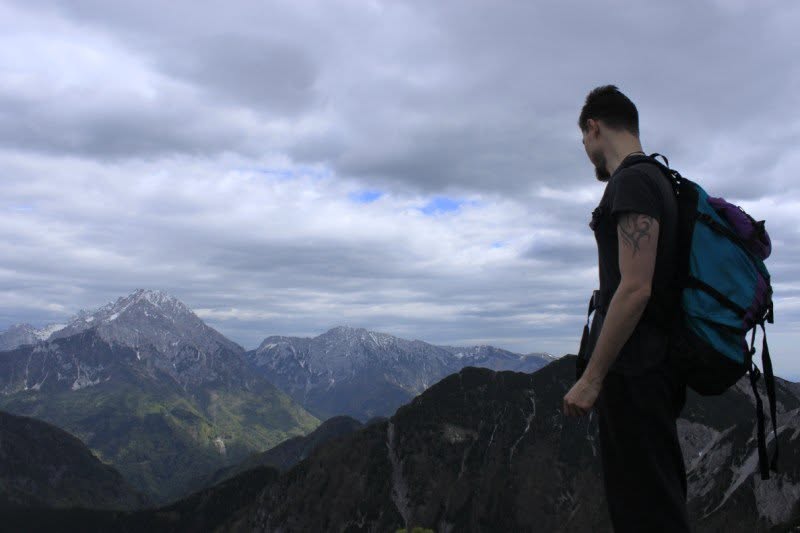
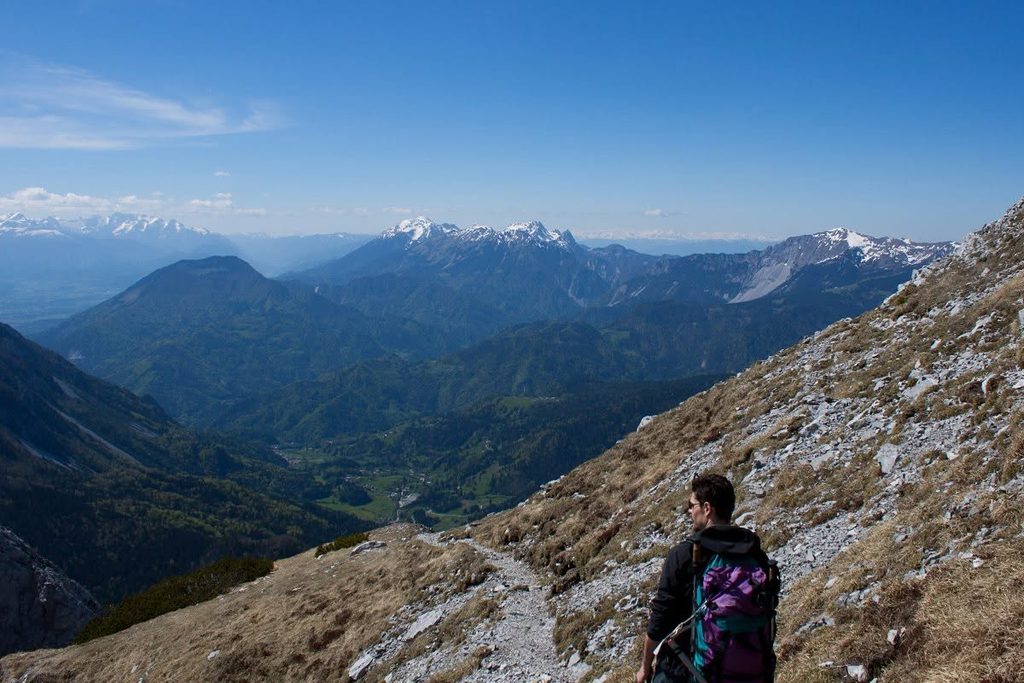
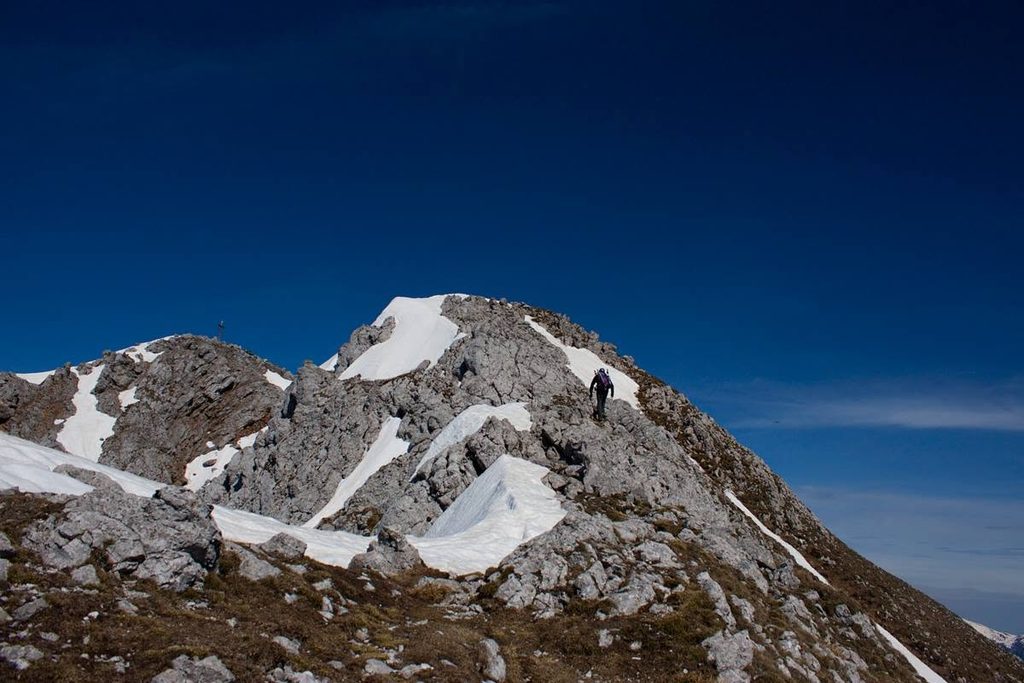
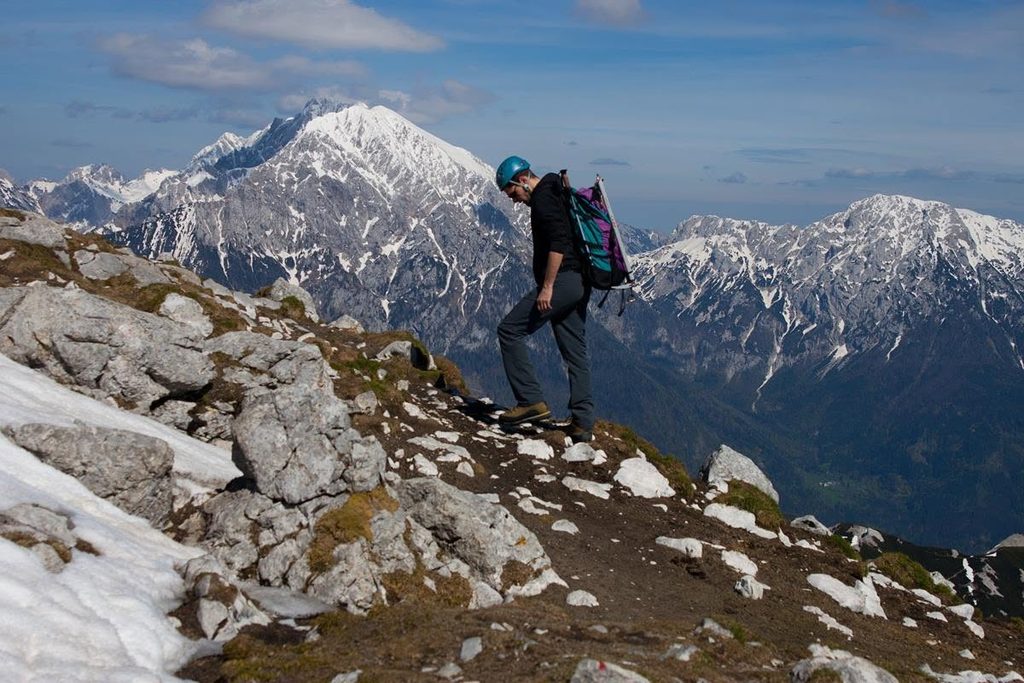
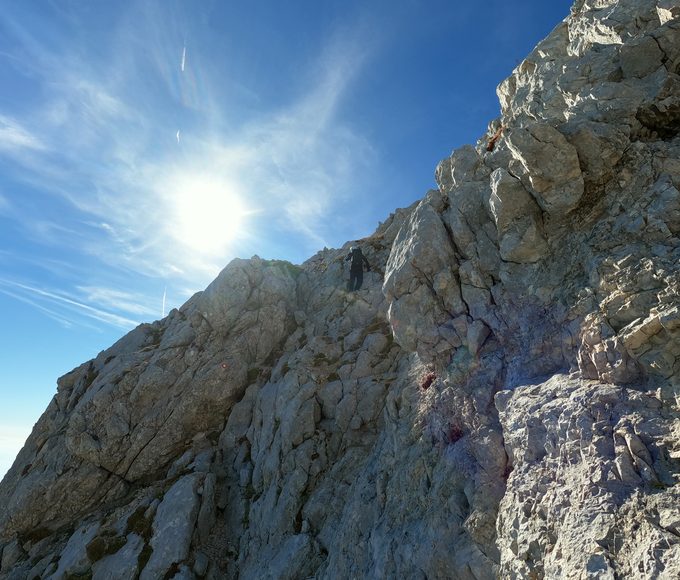
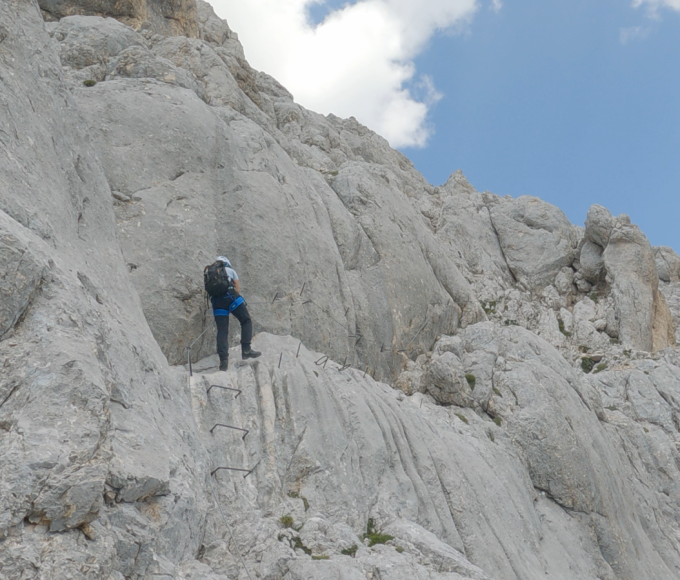
A shorter but significantly more demanding route to the summit from the north runs through Žrelo — a narrow, steep gully that climbs along the edge of a ravine almost all the way to the summit ridge. Although this trail is also marked, it’s demanding terrain: the more exposed sections are protected with steel cables and pegs, so it’s best described as a simple via ferrata. In summer conditions a helmet is definitely recommended, while in winter the required gear depends on the state of the terrain — we needed an ice axe and crampons.
The trail starts at Dom pod Storžičem, follows the edge of the Jesenje meadow, and then enters Žrelo itself, which climbs steeply through the forest and over bare rock all the way up to the main ridge, at the junction that’s actually named after it — “Žrelo” (1810 m). From there, turning left along the ridge, a lovely hiking trail with excellent views leads the rest of the way. The elevation gain from the hut to the summit is roughly 1000 meters.
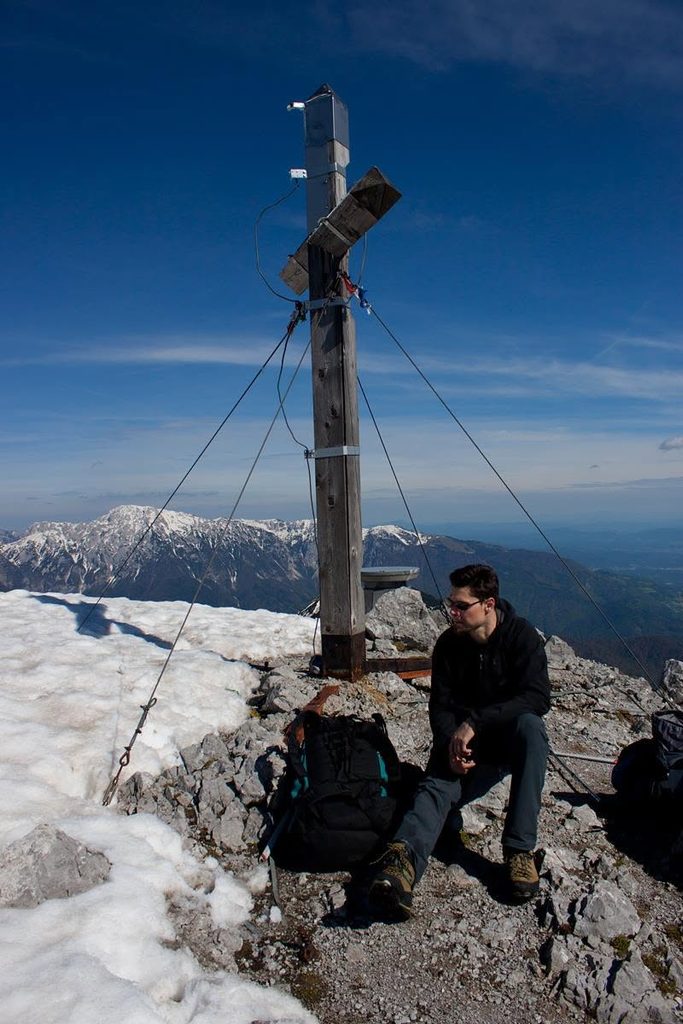
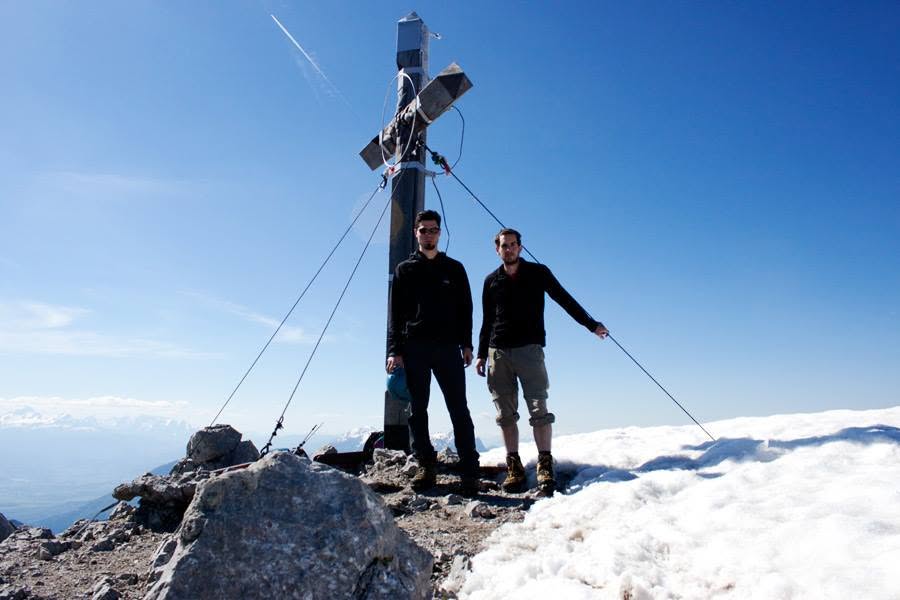
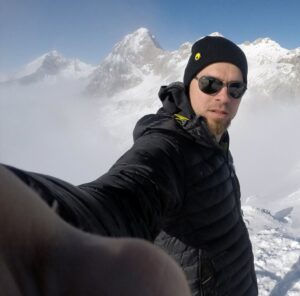
Matija, who also took these photos, and I did this route in winter, and an ice axe and crampons were necessary. A helmet is a smart addition too. The section is exposed in places, and if the rock is under ice, caution is essential.
Peto Žrelo – The Fifth Revine
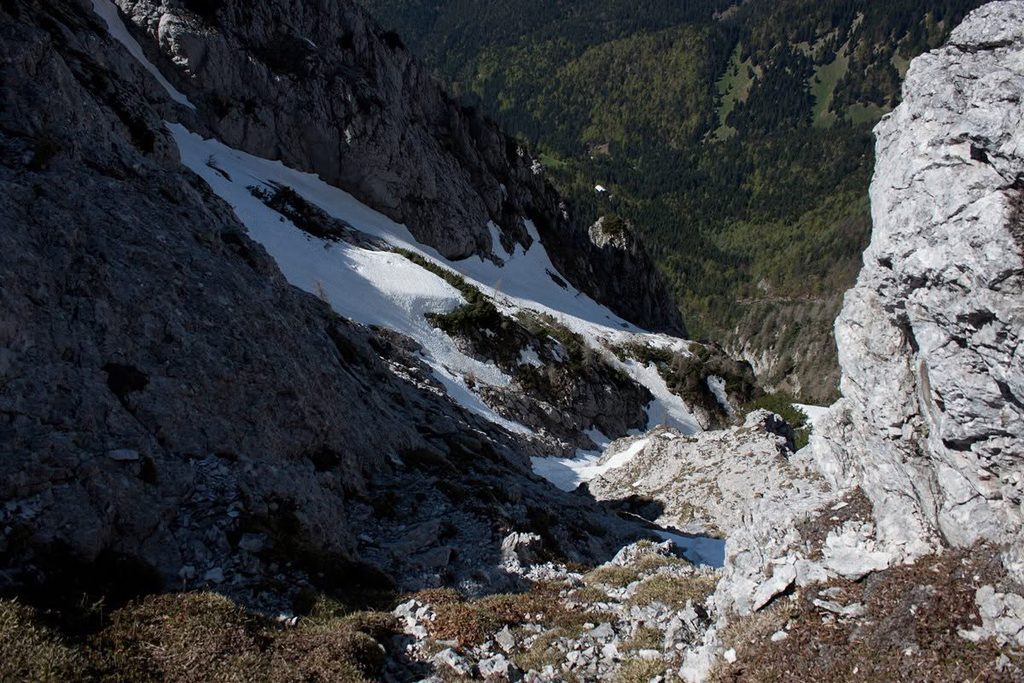
The most demanding of the three routes mentioned is Peto žrelo — a steep gully in Storžič’s north face, with a gradient of 40 to 50 degrees, located east of the classic Žrelo and west of the even more demanding Kramarjeva route. Among alpinists and ski tourers, Peto žrelo is better known as a popular descent variation after climbing the Kramarjeva route, but it’s also used as a standalone, somewhat simpler alpine route.
Unlike Žrelo and Škarjev rob, Peto žrelo is not a marked hiking trail — it’s terrain for experienced, properly equipped mountaineers, where caution is needed due to the steepness, potential rockfall, and the poorly marked path through the upper, narrower section of the gully.
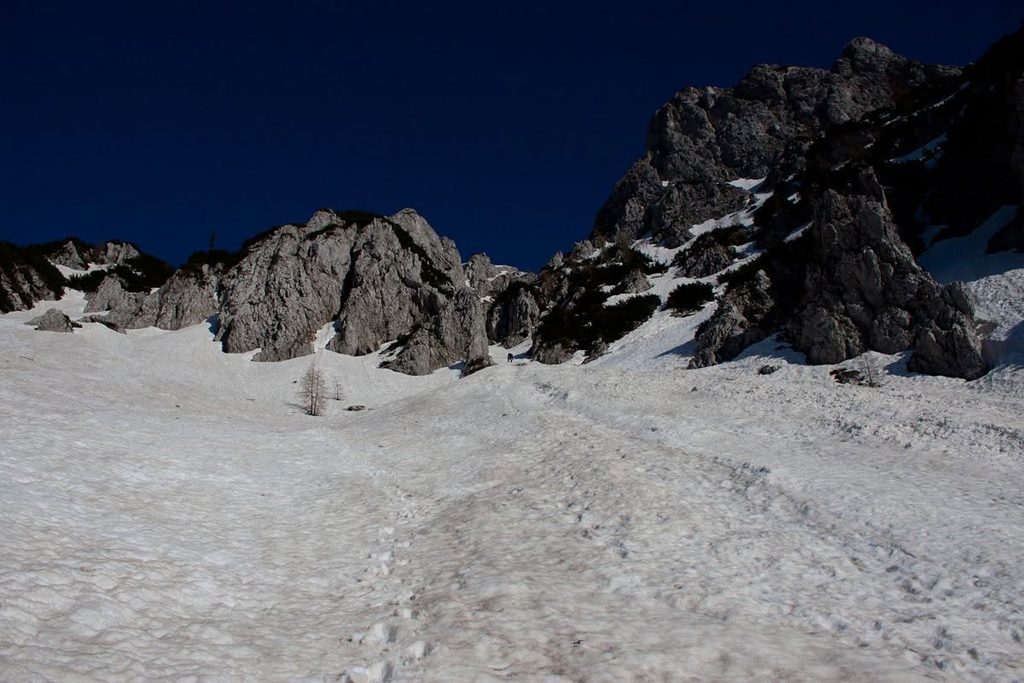
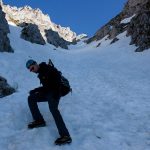
My encounter with Peto žrelo was on the way down, which in hindsight wasn’t the best idea — a strong north wind was blowing up top, and the entire upper part of the north face was covered in thick ice. But we usually prefer descending a different route than we came up, just to make things more interesting, so that’s what we did this time too. The upper section is quite exposed and steep, and honestly, two ice axes would have helped. As it was, near the top we were held only by the front points of our crampons on the descent. I think we also came down part of the Kramarjeva route near the top, before returning to Peto žrelo.
Lower down, the sun had started melting the ice, and there the snow kept clogging our crampons, resulting in poor grip and the occasional slip. In the dead of winter, having a rope for the descent down Peto žrelo wouldn’t be a bad idea either.
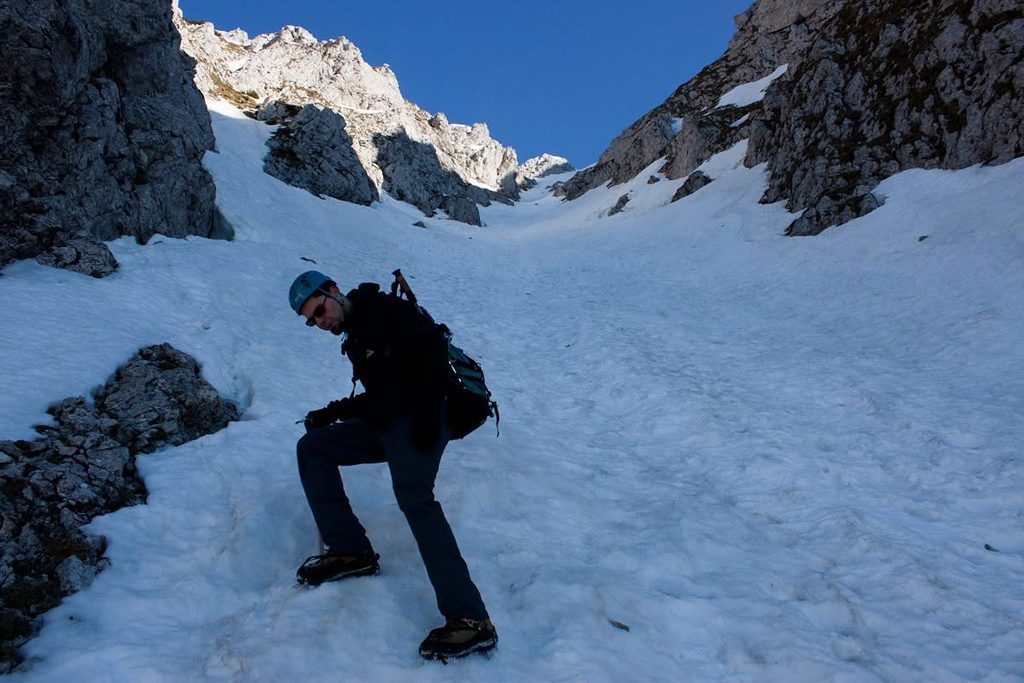
Descending the Fifth Revine on Storžić
Comparing the Three Routes
Of the three, Škarjev rob remains the route I’d recommend to anyone heading up Storžič for the first time or without experience on exposed terrain. Žrelo is the next step up: physically more demanding and exposed in places, but the cables and pegs make it safe for anyone comfortable with via ferratas and equipped for winter conditions when needed. Peto žrelo is another step beyond that – while not an especially hard climb in itself, this is already the kind of terrain where, in winter, things can go downhill fast. Literally.
Practical Information
- Starting point: Dom pod Storžičem mountain hut (1123 m), Lomščica valley
- Summit: Storžič, 2132 m
- Elevation gain: approx. 1000–1180 m (depending on the route)
- Škarjev rob: marked trail, technically straightforward
- Žrelo: marked trail, semi-via-ferrata character, helmet recommended, ice axe and crampons in winter
- Peto žrelo: unmarked, alpine gully – requires experience and additional gear (harness, rope, self-belay kit), ice axe and crampons in winter
- Note: all three routes require solid fitness; Žrelo and Peto žrelo additionally demand experience on exposed terrain
Gear for Storžič
For this tour, I wouldn’t go without the basic hiking essentials:
- hiking boots
- enough water
- food
- phone and map
- basic first aid
- spare clothing, depending on the weather
- trekking poles (helpful on the normal route, up and down)
- For Žrelo – a harness and a sling with a carabiner, or a via ferrata set, plus a helmet
- In winter conditions: ice axe, crampons, helmet; for Peto žrelo, a rope won’t hurt either






Leave a comment