



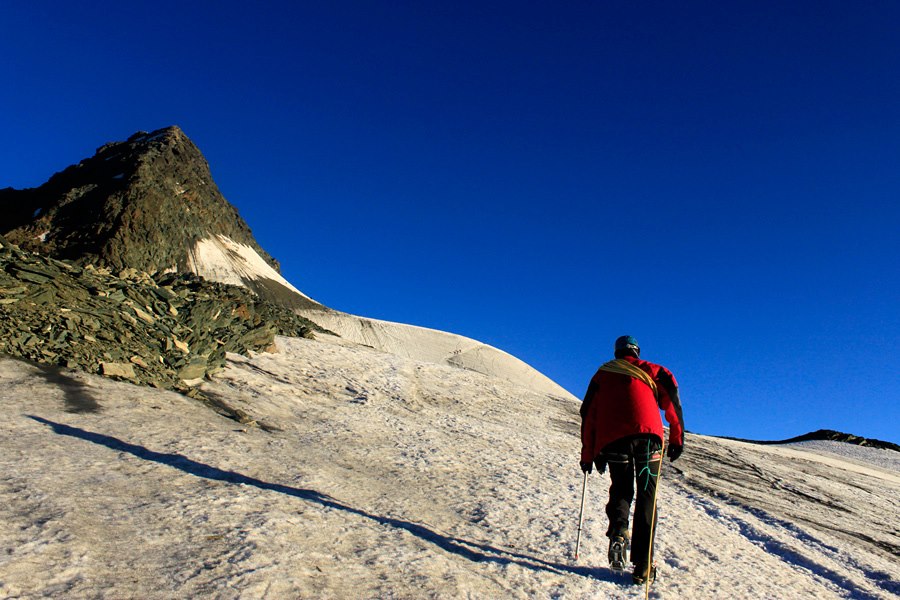
At 3,798 metres, Grossglockner is Austria’s highest mountain and one of the most popular alpine objectives in the Alps. For many hikers and mountaineers, it represents their first serious encounter with high-altitude terrain, glaciers, and exposed ridge climbing.
Is Grossglockner Difficult?
That depends on what you’re comparing it to.
For an experienced mountaineer who has already spent time in alpine terrain, Grossglockner is not particularly technical.
For someone coming directly from day hikes in lower mountains, however, it can be a very serious challenge.
The main difficulties are not only the altitude and physical effort, but also:
- Glacier travel
- Using crampons and an ice axe
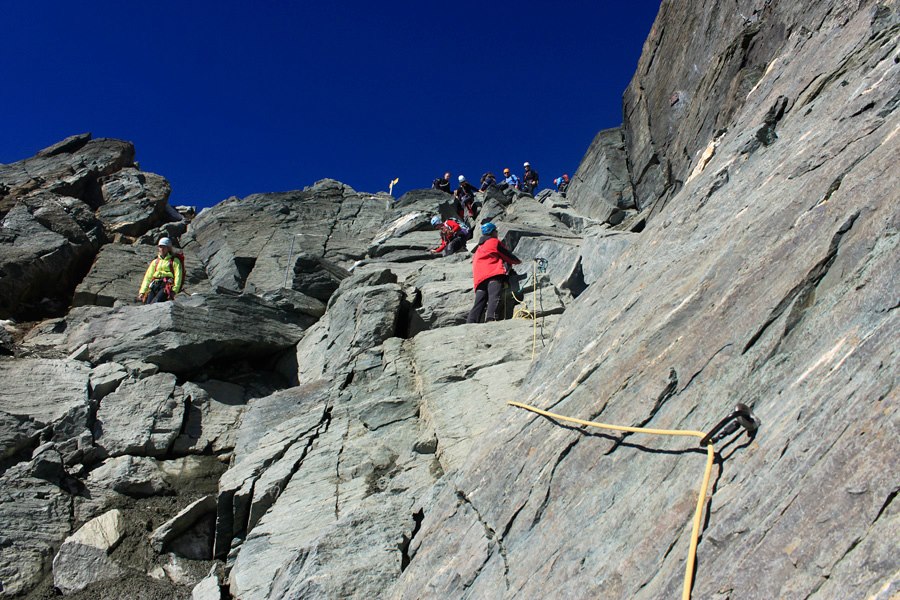
- Exposed terrain, especially on the transition from Klein Glockner to Grossglockner
- Rapidly changing alpine conditions
- Crowds during the summer months
- Winter conditions and ski access outside the main climbing season
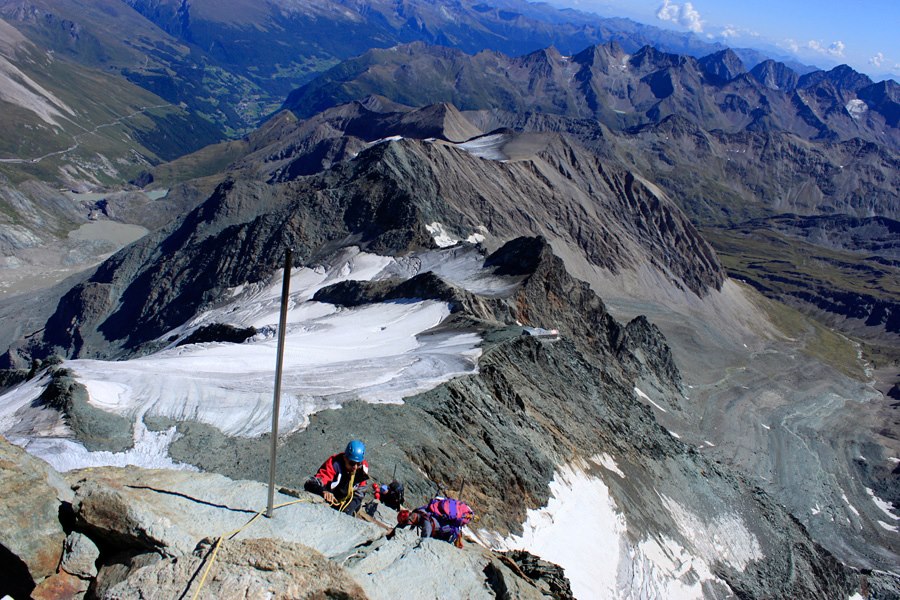
Do You Need a Guide for Grossglockner?
If you have no experience with glaciers or crampons, hiring a guide is a very good idea.
Technically speaking, the normal route is not extremely difficult, but a fall in certain sections can have serious consequences.
This is especially true on the final summit ridge.
When Is the Best Time to Climb Grossglockner?
The main climbing season runs from June to September.
Most ascents take place during July and August.
During this period, conditions are usually at their most stable, but it is also the busiest time of year.
If you have flexibility, early September often offers an excellent balance between stable weather and fewer climbers on the mountain.
Getting There & Practical Info
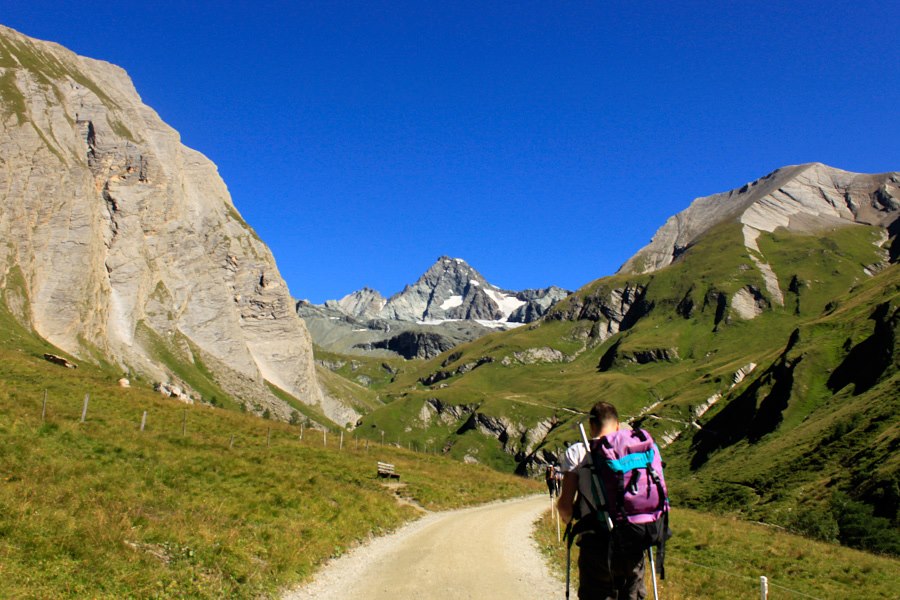
There’s no entrance fee for Hohe Tauern National Park itself – access is free. But the final stretch of road to Lucknerhaus (the Kalser Glocknerstraße) is a toll road, so don’t be surprised by a fee at the barrier – it’s charged based on how long you stay, and rates can change, so it’s worth having a bit of cash or a card ready.
- Parking: Available at Lucknerhaus, the standard starting point for the Normal Route
Hut prices
Overnight and half-board prices at both Erzherzog Johann Hütte and Stüdlhütte vary by season and change fairly often – budget somewhere in the €60–70 range per person for half-board (bed, dinner, breakfast) as a rough planning figure, less if you’re an Alpenverein member. Always check current rates directly with the hut before your trip.
- Worth it: If you’re not already a member of an Alpenverein club, joining one before the trip often pays for itself in hut discounts alone – plus it includes mountain rescue cost coverage, which matters here given the terrain.
- Reserve ahead: Both huts get busy in July and August – book in advance, especially if traveling as a group.
The Most Popular Route
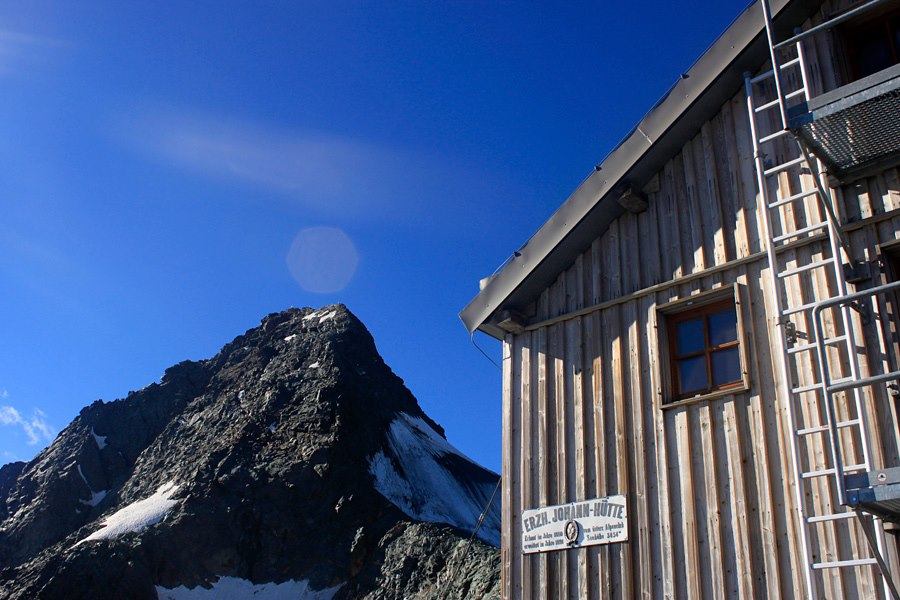
The standard route passes via Erzherzog Johann Hütte.
Most climbers follow the Normal Route (Via Normale):
Lucknerhaus → Stüdlhütte → Erzherzog Johann Hütte → Grossglockner
The climb is usually divided into two days.
Day 1
Climb to either Stüdlhütte or Erzherzog Johann Hütte.
Stüdlhütte is the more comfortable option. It is a modern hut located at a lower altitude, making for a much better night’s sleep. The trade-off is a longer summit day.
If you stay at Erzherzog Johann Hütte, you will probably not sleep particularly well due to the altitude, but your summit day will be significantly shorter.
Day 2
Early start for the summit, followed by the descent back into the valley.
Another popular route is Stüdlgrat, an alpine climb graded UIAA III+.
The Grossglockner Ascent
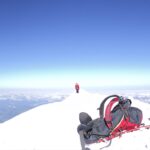
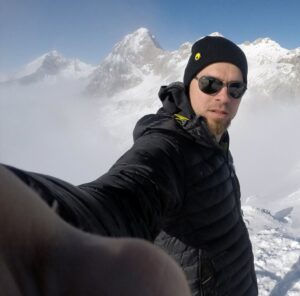
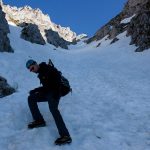
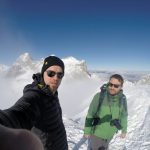
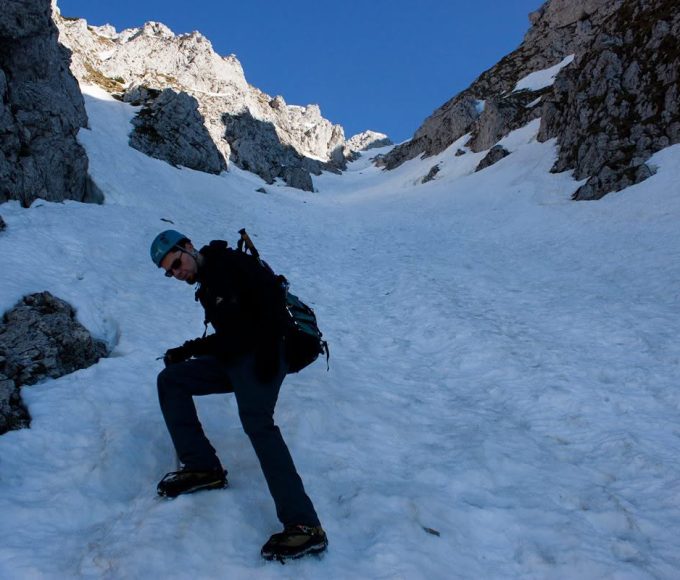
My buddy Matija (who took most of the photos) and I went via Normale and slept at the Erzherzog Johann Hütte. HR mountain association cards were valid, so we got a discount. With the note that this climb was around 2014, so the situation may have changed.
It’s smart to go a little slower to the Erzherzog Johann Hütte, give yourself enough time to get used to the altitude, and the next morning, once you’re acclimatized, you can head faster to the top.
We got caught in a crowd, and even though we started early in the morning for the top, we were back at the car in the valley late in the evening. We did have a quick beer on the way back, though, at the Stüdlhütte. Actually, two beers.
What Is the Final Summit Section Like?
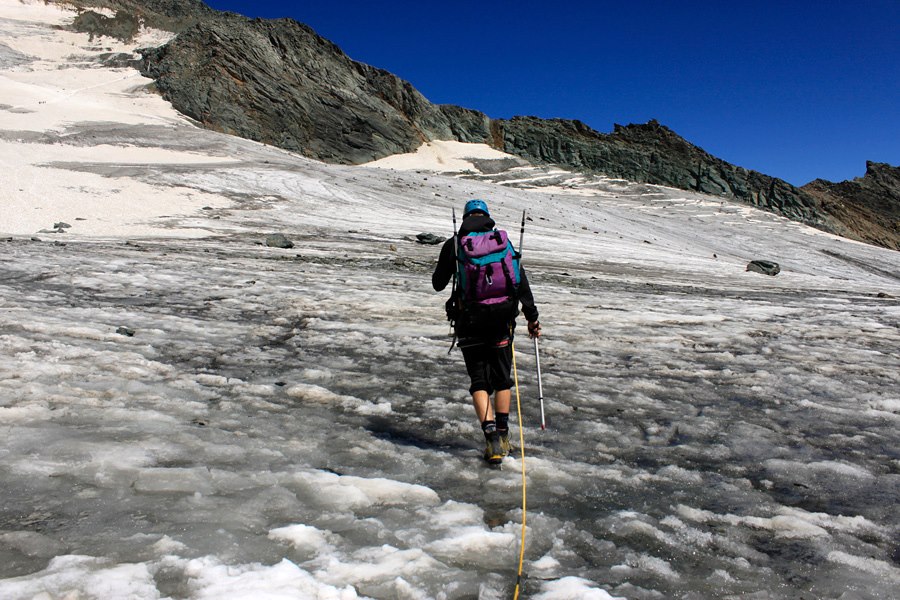
After crossing the glacier, the most interesting part of the route begins.
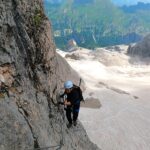
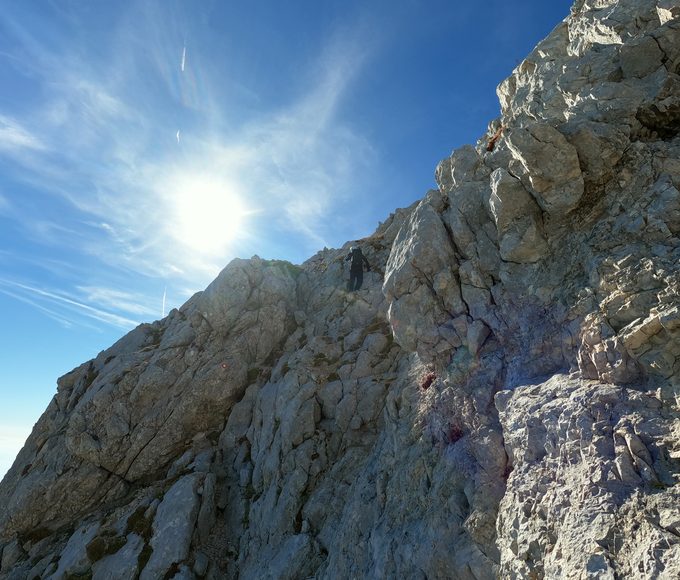
The summit ridge is relatively narrow and, in places, quite exposed.
Much of the ridge is equipped with steel rods and fixed protection that make movement and belaying easier.
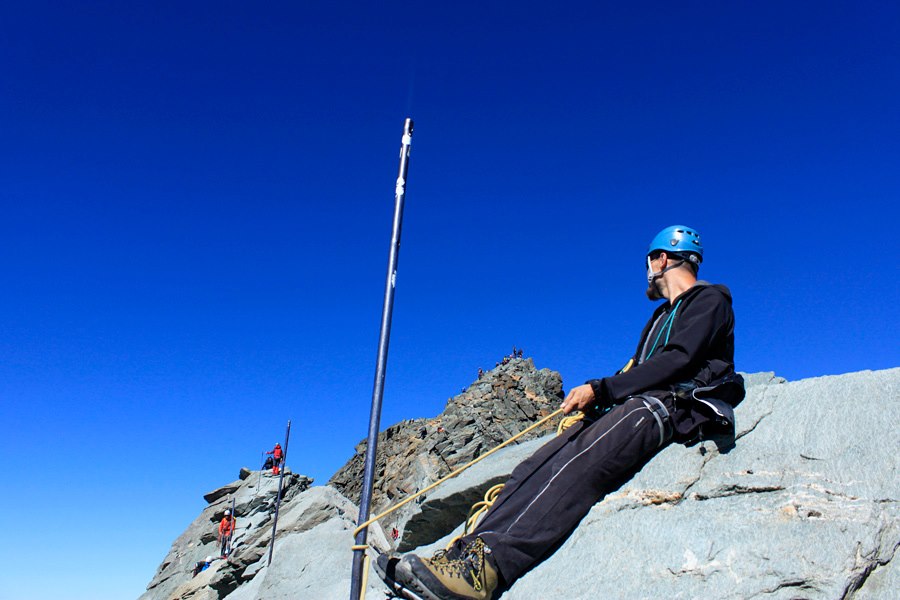
In good conditions, the technical difficulties are modest, but crowds can significantly slow progress.
People also tend to push and rush through bottlenecks, so it’s important to stay focused and look after your own safety, especially on the more exposed sections.
Safety on the Summit Ridge
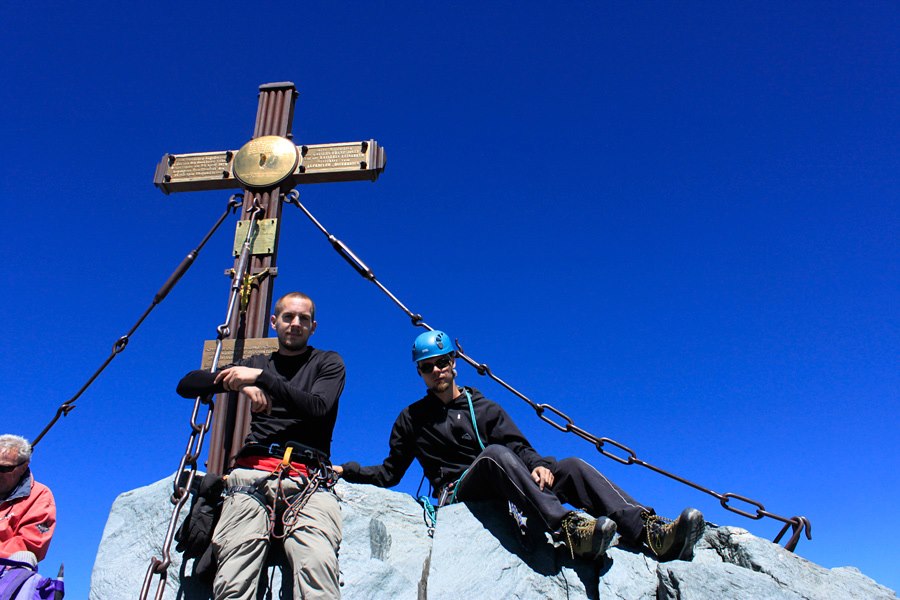
The transition from Klein Glockner to Grossglockner is the section that demands full attention because exposure, crowding, and fatigue tend to combine right there.
Bottlenecks are real: People pushing to get past each other on exposed terrain is one of the more common ways mistakes happen – it’s worth accepting that you may need to wait, rather than rushing a pass on narrow rock.
Glacier travel isn’t optional to prepare for: If you haven’t used crampons and an ice axe before, practice on easier terrain first. A fall on the glacier section behaves very differently than a stumble on a hiking trail.
Weather changes fast at this altitude: Nearly 3,800 m means real alpine conditions – wind, cold, and visibility can shift quickly even in summer. An early start isn’t just tradition, it’s what keeps you off exposed terrain before afternoon weather typically builds.
Consider mountain rescue coverage: Alpenverein membership (ÖAV, DAV, or similar UIAA-affiliated clubs) includes worldwide rescue cost coverage – worth having before a route like this, not after.
Grossglockner is a good “first serious” alpine objective – if the person already has glacier and crampon experience from somewhere lower-stakes first. It’s a forgiving mountain in good conditions, but not a place to learn glacier travel from scratch.
How Fit Do You Need to be to climb Grossglockner?
More fit than most people expect.
While Grossglockner is not as high as Mont Blanc, nearly 3,800 metres is still enough altitude to be felt.
If climbing Triglav feels like a major effort, it may be worth gaining more experience on demanding alpine routes before attempting Grossglockner.
Good preparation objectives include:
- Triglav
- Grintovec
- Mangart
- Jalovec
- Hochalmspitze
- Ankogel
Equipment for Grossglockner
- 35–40 litre backpack
- Mountaineering boots
- Crampons
- Gaiters
- Ice axe
- Headlamp
- Trekking poles (optional for the lower section)
- Climbing harness
- Helmet
- Three locking carabiners
- Warm hat and gloves (plus spare gloves)
- Insulated jacket, fleece and waterproof shell
- Sun hat, buff and high-SPF sunscreen
- Sunglasses and ski goggles
- First-aid kit and emergency bivvy blanket
- Thermos flask
- Pocket knife
- Climbing rope (or glacier rope)
- Slings
- Three ice screws
- Map, compass, phone or GPS
What I like most about Grossglockner is that it offers a genuine high-mountain experience without the logistics required by bigger Alpine peaks.
You don’t have to drive all the way to Chamonix or Aosta.
You don’t need a full week for acclimatisation.
From Zagreb, you can reach the trailhead in a single day by car.
Yet you still get glaciers, crampons, an alpine start in the dark, sunrise over the Alps, and the feeling that you’re standing on a serious mountain.
Because of that, I consider Grossglockner one of the best first high-altitude alpine objectives for mountaineers from Croatia.



1 Comment