



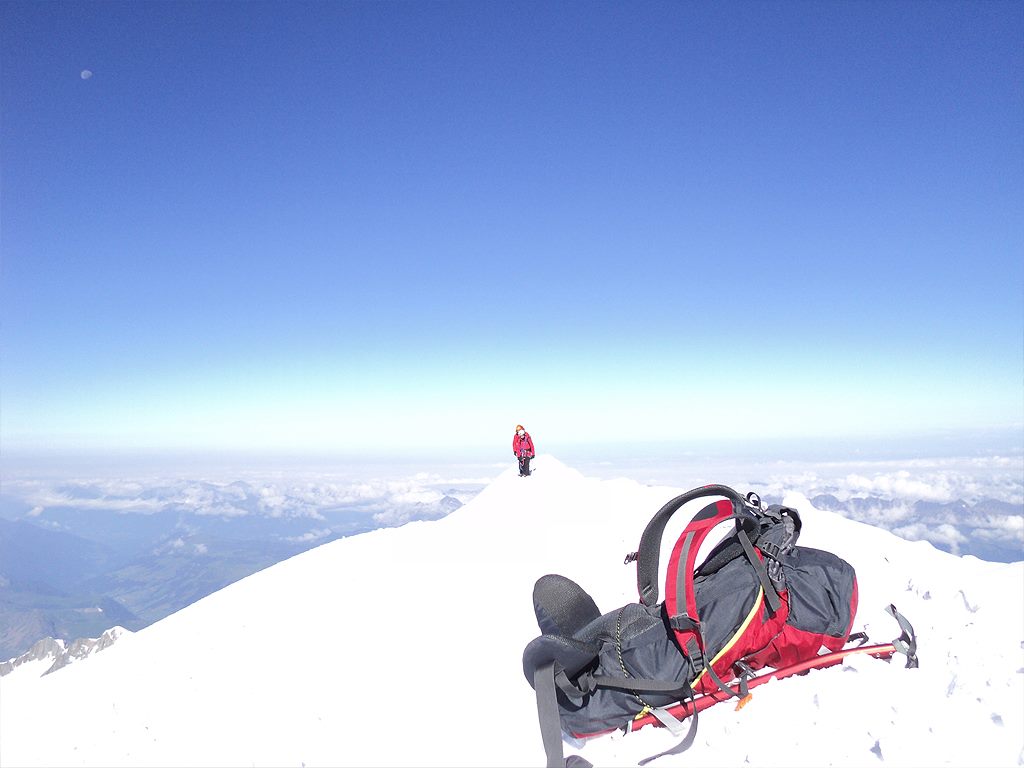
If you spend enough time in the mountains, sooner or later someone will mention Mont Blanc.
The highest peak in the Alps has attracted climbers and hikers from around the world for decades. For some, it’s a lifelong goal. For others, it’s simply the next logical step after a few serious alpine ascents.
Before you book accommodation in Chamonix and start buying gear, there are a few things worth knowing.
The first is that Mont Blanc is not the most technically difficult mountain in the Alps.
The second is that it’s still challenging enough to surprise a large number of people every year who underestimate it.
What Skills Do You Need to Climb Mont Blanc?
Mont Blanc is not where an alpine climbing career begins. By the time you decide to attempt it, you should already have plenty of mountain experience and a good number of kilometers in your legs.
Before Mont Blanc, I’d recommend completing several serious ascents such as Triglav, Grintovec, Grossglockner, or Gran Paradiso. Not because they’re mandatory prerequisites, but because they’ll give you valuable experience moving through more demanding terrain and at higher altitudes.
From a practical standpoint, you should be able to:
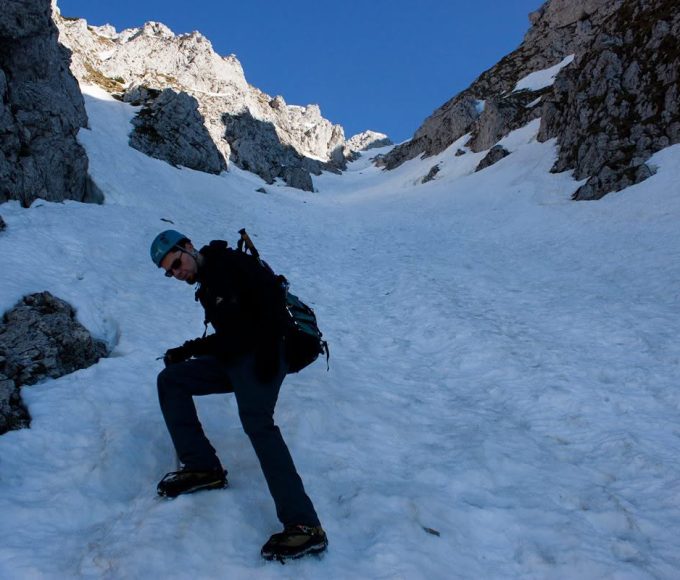
- Walk confidently in crampons while carrying an ice axe
- Perform a self-arrest with an ice axe
- Tie into a rope correctly
- Ascend out of a glacier crevasse using prusik techniques
- Navigate in mountain terrain and assess weather conditions
Do You Need a Guide for Mont Blanc?
If you don’t know how to use crampons and an ice axe, travel safely on a glacier, or rescue a partner from a crevasse, the answer is simple: yes.
If you already possess these skills and have glacier experience, Mont Blanc can be climbed independently with proper preparation and suitable conditions.
Mont Blanc
At 4,808 meters (15,774 ft), Mont Blanc is not only the highest peak in the Alps but also one of the most famous mountains in the world. Its snow-covered summit can be seen from miles away, and its name commands respect even among hikers who have never set foot in the high Alps.
There are five main routes to the summit:
- Goûter Route – the standard route.
- Trois Monts Route – crosses Mont Blanc du Tacul and Mont Maudit, starting from Aiguille du Midi. More demanding than the Goûter Route both physically and technically.
- Grands Mulets Route – the route used during the first ascent in 1786.
- Pope Route – approaches from the Italian side; a wilder alternative to the standard route.
- Miage–Bionnassay Route – a long and technical route requiring around three days, suitable only for experienced alpinists.
I originally planned to climb via the Trois Monts Route. However, my climbing partner withdrew at the last minute, so I had to find another team to join. Surprisingly, I managed to do so because someone named Đuro had dropped out. Sorry Đuro—we never met, but I hope you eventually made it to Mont Blanc. That team was climbing via the Goûter Route, so that’s the route I ultimately used to reach the summit.
When Is the Best Time to Climb Mont Blanc?
The best season for climbing Mont Blanc is late spring through summer, roughly from June to September.
Weather conditions are generally most stable during this period. Even so, temperatures near the summit can still be extremely cold. While Chamonix might be experiencing 30°C (86°F), summit temperatures can drop below -20°C (-4°F), not including wind chill.
Arriving in Chamonix
Almost every Mont Blanc ascent begins in Chamonix, the legendary French alpine town that lives and breathes mountaineering.
Upon arrival, your eyes are constantly drawn toward the peaks surrounding the valley. Glaciers, ice-covered faces, and sharp ridges remind you that you’ve entered a very different world from the mountains most of us are used to in Croatia.
The atmosphere in Chamonix is unique. You’ll meet climbers from every corner of the world, and conversations in cafés often revolve around weather forecasts, glacier conditions, and plans for the following morning.
And yes—it’s expensive.
The first time I visited was in 2016, when Chamonix felt extremely expensive by Croatian standards. Thanks to inflation and rising living standards back home, the difference feels somewhat smaller today.
During my first visit, I stayed at a campground in Chamonix. It was well-equipped and reasonably priced. This time, I stayed in an Airbnb in Saint-Gervais, about 30 kilometers away. Prices were lower and the crowds much smaller.
By pure coincidence, we also caught part of the Tour de France while we were there, as one of the stages passed through Saint-Gervais. On an earlier visit, I happened to be in Chamonix during the Ultra-Trail du Mont-Blanc, so I’ve accidentally experienced the atmosphere of both major events.
Preparing for Mont Blanc
Mont Blanc is often described as an “easy 4,000-meter peak,” but that description can be misleading.
An altitude of nearly 5,000 meters is a serious challenge for the human body. Add unpredictable weather, glacier hazards, and objective risks, and you quickly realize that preparation, fitness, and experience matter enormously.
Despite its reputation, Mont Blanc claims lives every year—usually due to a combination of poor weather, objective hazards, and underestimating the mountain.
The days leading up to the climb should ideally be used for acclimatization. No matter how fit you are, your body needs time to adapt to high altitude.
Personally, I think a week is the minimum reasonable timeframe for a Mont Blanc trip: two days for the climb itself, plus travel, acclimatization, and a buffer day or two in case of bad weather.
Many climbers choose Breithorn for acclimatization. I acclimatized on Castor in the Monte Rosa massif, and I believe that made the actual Mont Blanc ascent feel considerably easier.
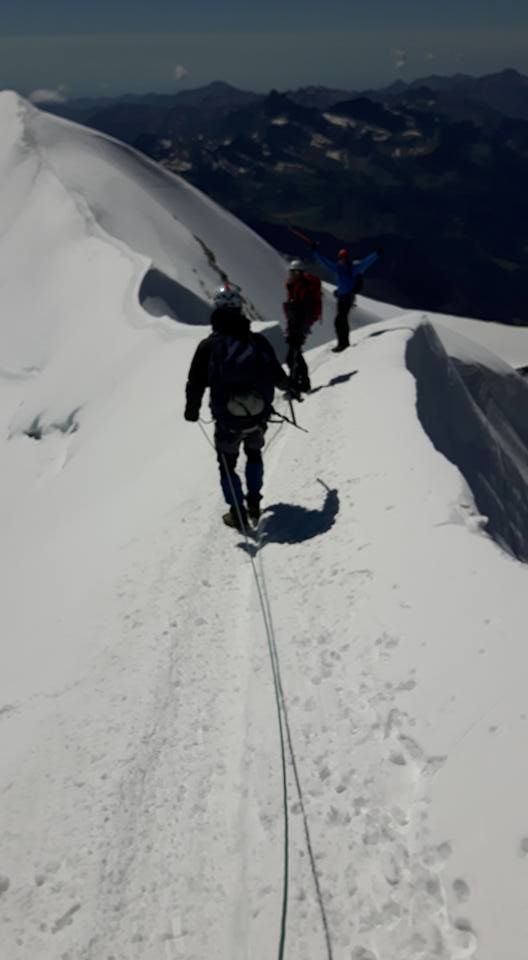
Castor acclimatisation
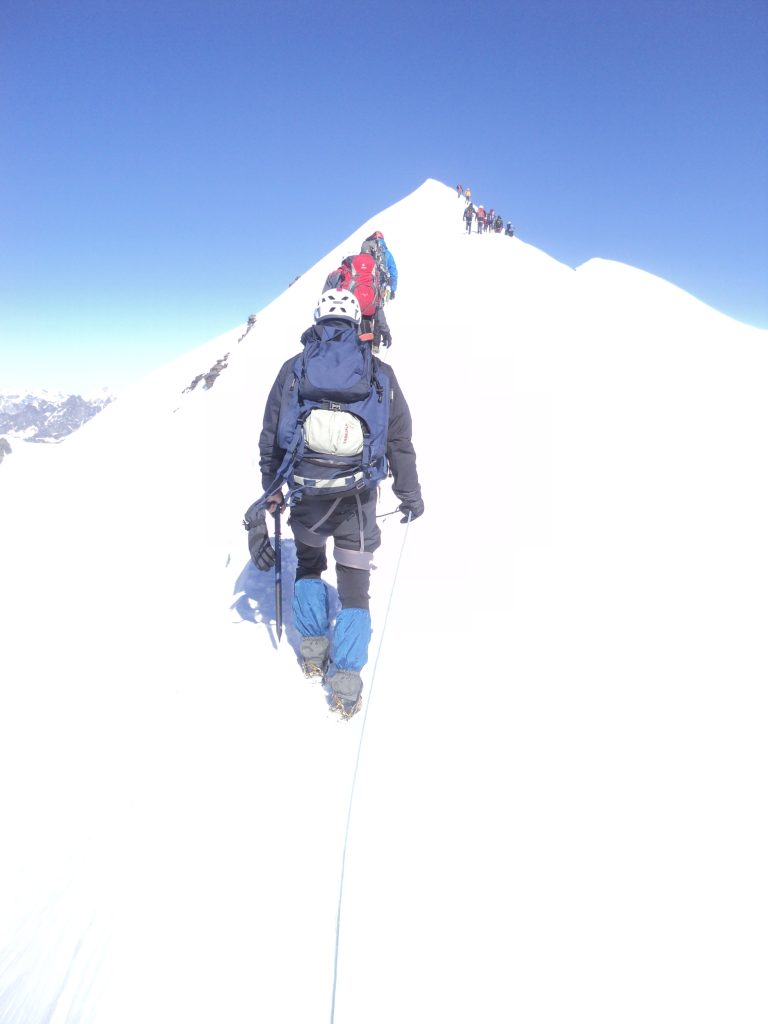
Training for Mont Blanc
Good fitness is essential.
I generally stay in shape through martial arts, hiking, diving, and running. Depending on my goals for a particular season, I simply increase the focus on one activity.
In preparation for Mont Blanc, I spent a lot of time running on Mount Medvednica above Zagreb. On several occasions I climbed it multiple times in a single day. Looking back, that was probably the best training I could have done.
I was in very good shape, yet I still found Mont Blanc surprisingly demanding—mostly because of the altitude.
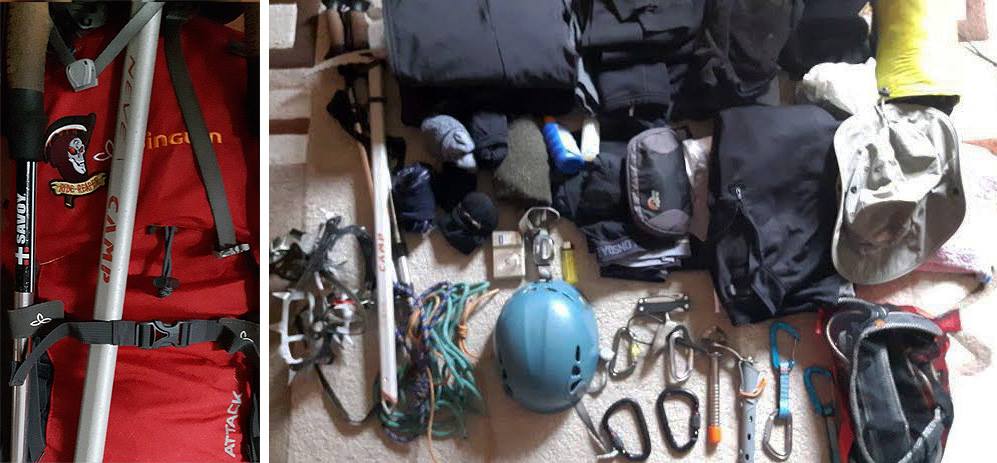
Equipment for Mont Blanc
- 35–40L backpack
- Mountaineering boots
- Crampons
- Gaiters
- Ice axe
- Headlamp
- Trekking poles (optional for the lower section)
- Climbing harness
- Helmet
- Three locking carabiners
- Warm hat and spare gloves
- Waterproof jacket, fleece, and rain gear
- Sun hat, buff, and high-SPF sunscreen
- Sunglasses and ski goggles
- First aid kit and emergency bivy
- Thermos flask
- Pocket knife
- Climbing rope
- Slings
- Three ice screws
- Map, compass, GPS, or smartphone
Your gear list will vary depending on the route, weather conditions, and whether you’re climbing independently or with a guide. This is roughly what I carried.
Food and Hydration
For the climb itself, I recommend carrying a thermos of water and a thermos of tea.
At high altitude and in cold temperatures, liquids can freeze, which is why insulated bottles are preferable to regular water bottles.
Food is highly individual. Above 4,000 meters I rarely have much appetite, so I prefer quick energy sources such as energy bars, chocolate, and dried fruit. Many climbers swear by energy gels.
You’ll typically receive dinner at the hut around 6–7 p.m. and breakfast around 2 a.m. Before the climb, eat as many carbohydrates as you comfortably can—you’ll burn through them quickly.
And hydrate constantly.
Mont Blanc Logistics
Most climbers divide the ascent into two days.
Day one is spent reaching either Tête Rousse Hut or Goûter Hut. Day two is summit day followed by the descent back into the valley.
During peak season (late June through August), hut reservations become extremely difficult to obtain. You’ll often need to book months in advance or hope for a last-minute cancellation.
Camping is prohibited on this section of the route, and checks are carried out to verify that climbers have valid hut reservations before continuing higher.
The Climb via the Goûter Route
Most climbers begin by taking the Tramway du Mont-Blanc to Nid d’Aigle (2,372 m), then hiking to Tête Rousse Hut (3,167 m).
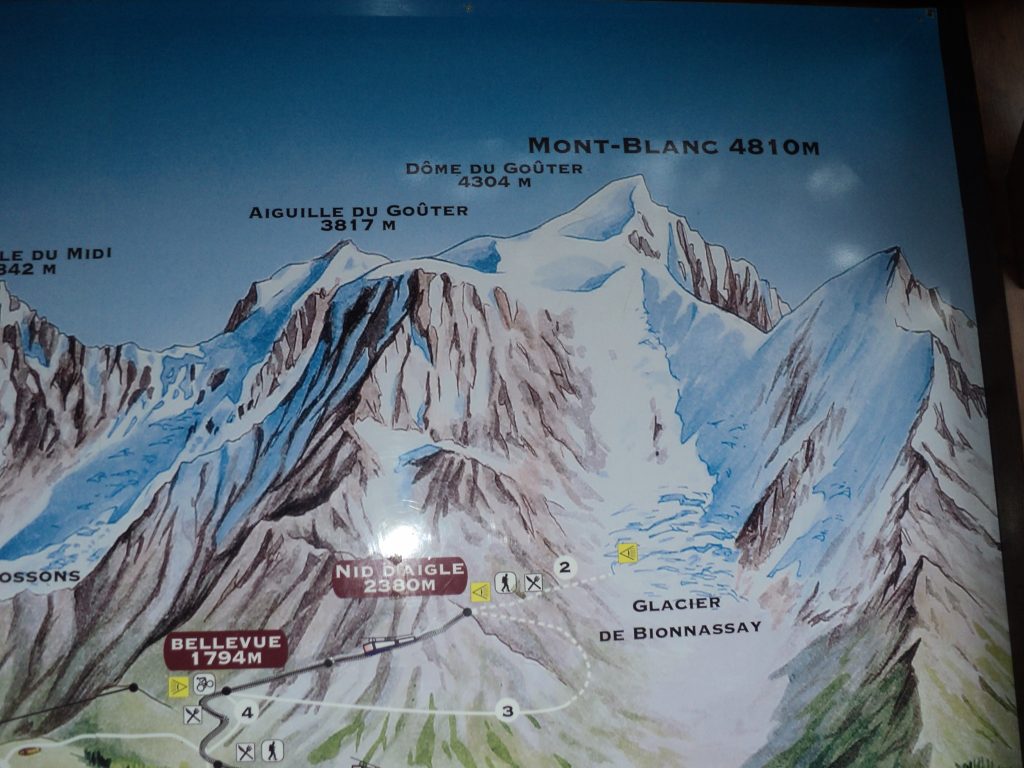
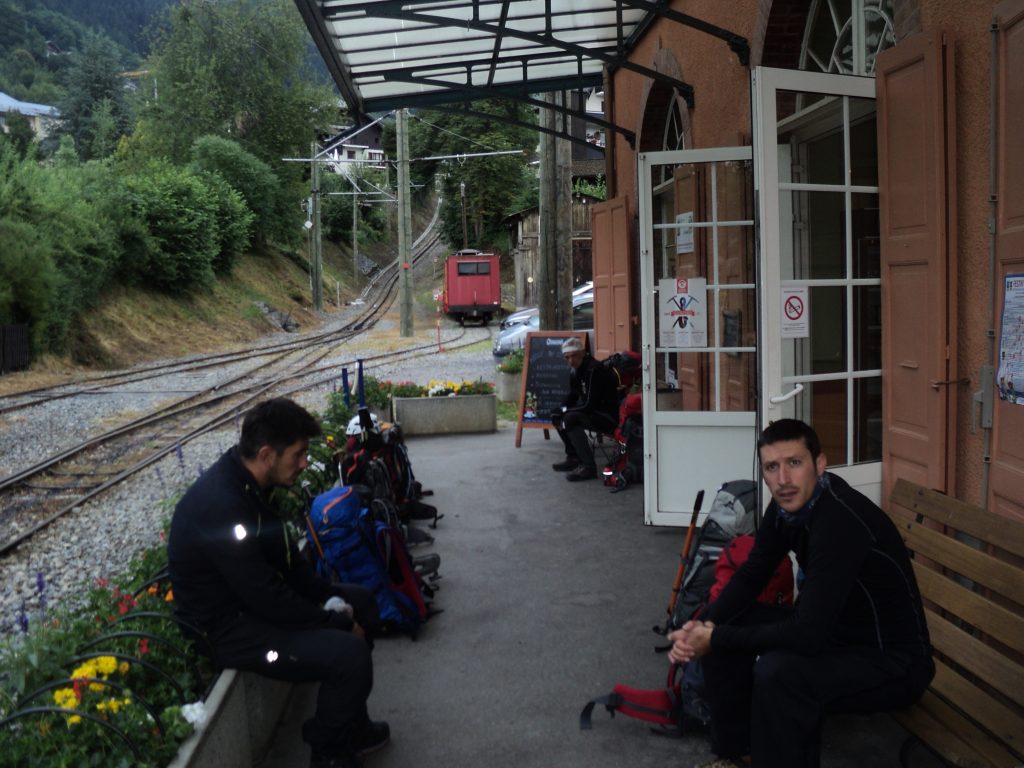
Tram du Mont Blanc station
From there, the route continues toward Goûter Hut via the infamous Grand Couloir, often nicknamed the “Death couloir” because many accidents happen due to frequent rockfall.
Cross it as quickly as possible and avoid getting trapped in the middle during periods of heavy traffic.
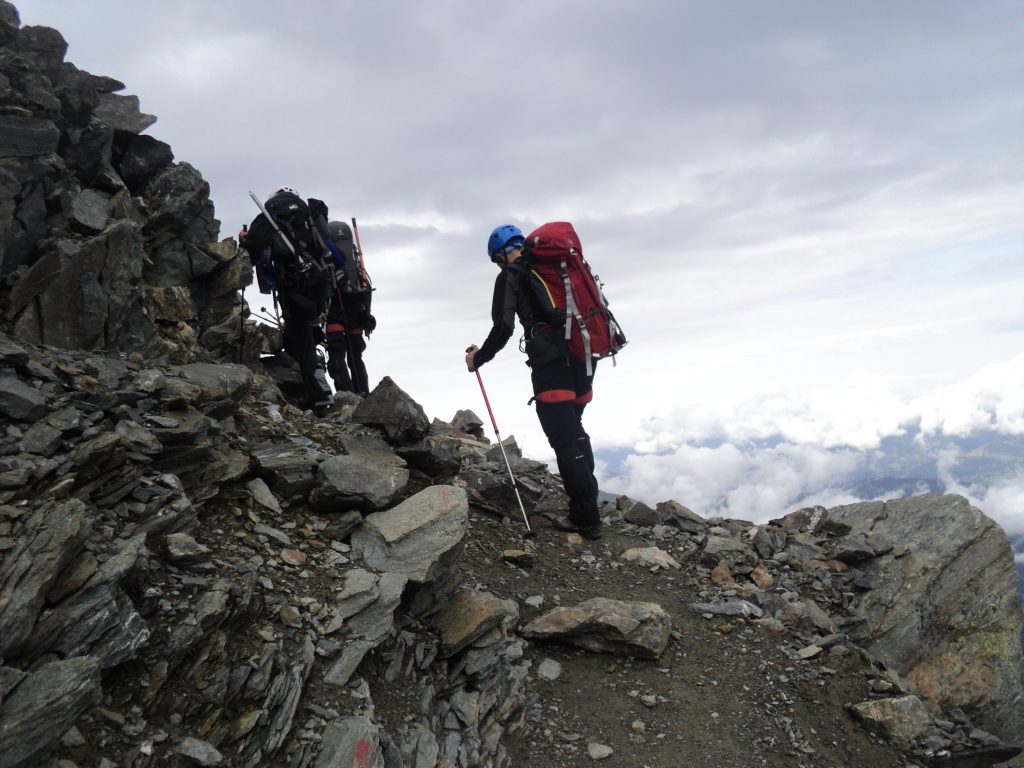
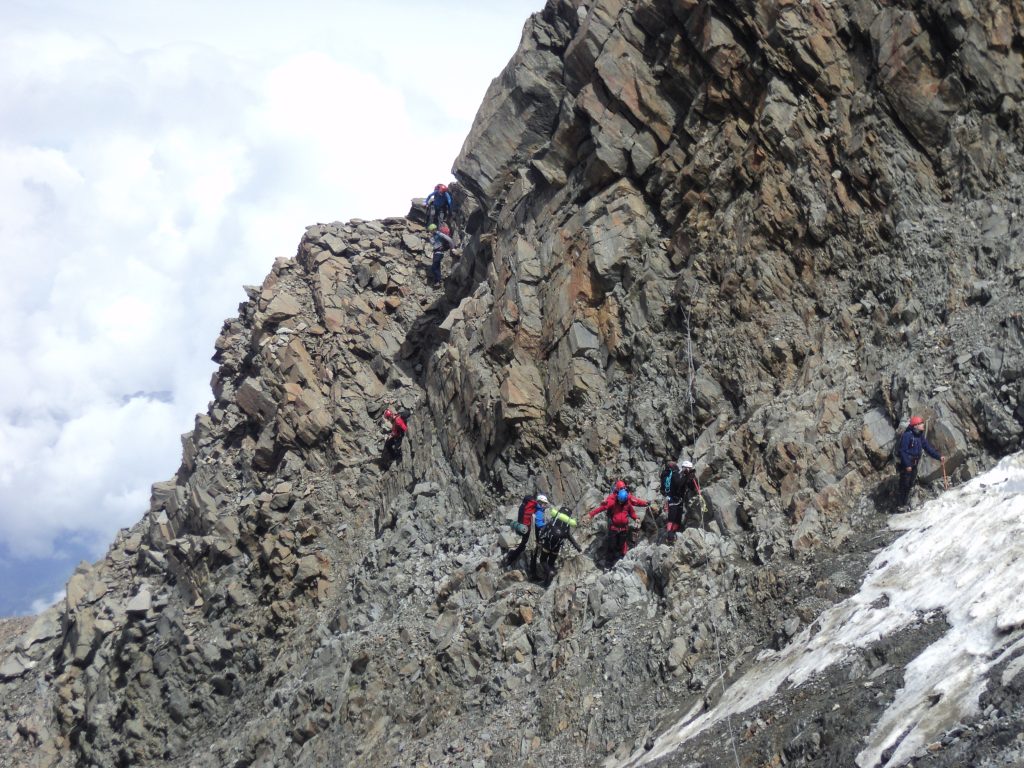
Below Grand Couloir on Mont Blanc
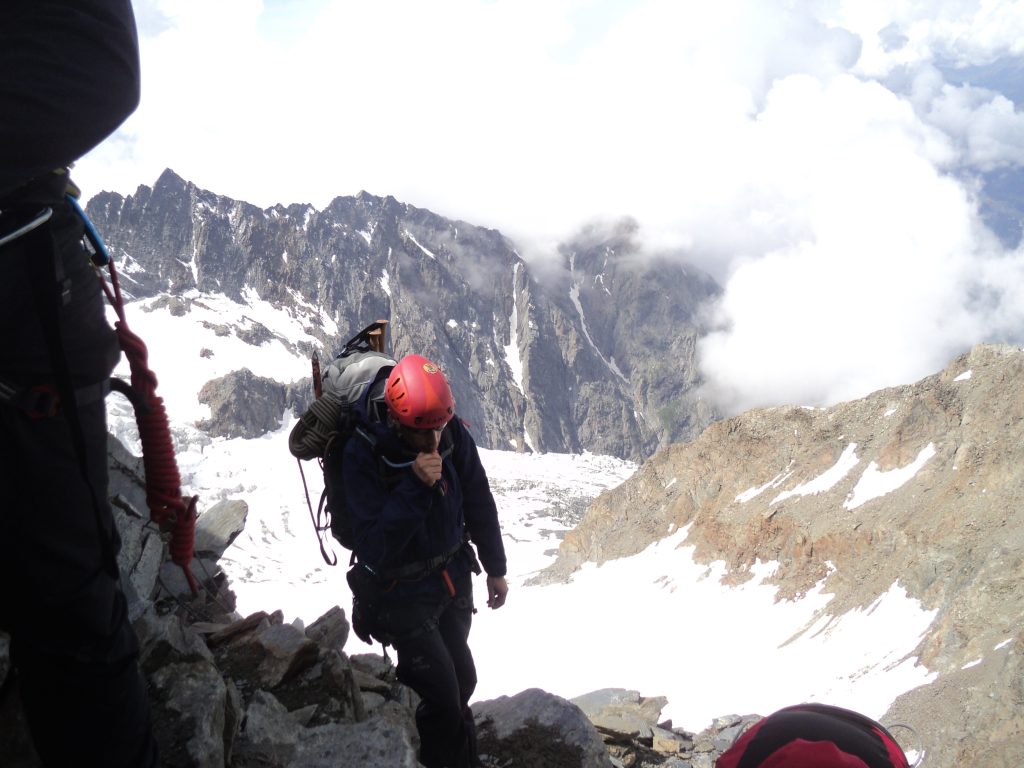
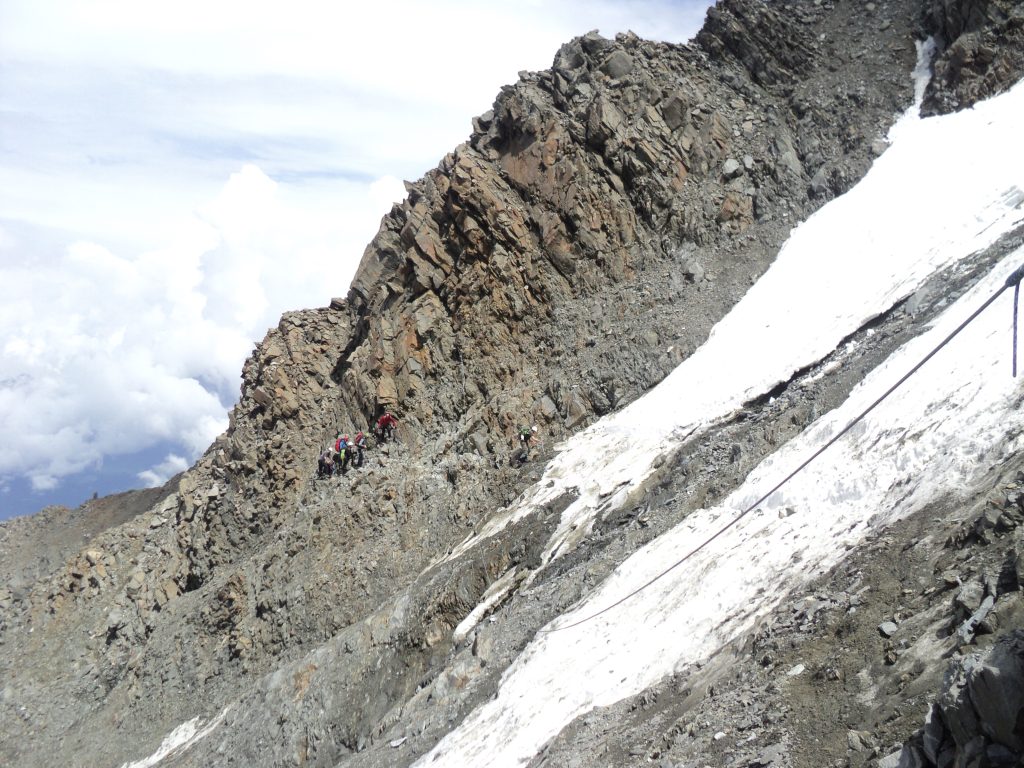
How to pass the Grand Couloir (Death Couloir)
The best way to do it is to have the most experienced person pass first, then act as a spotter for the rest, navigating them back and forth while keeping an eye on the rockfall. Check the video below:
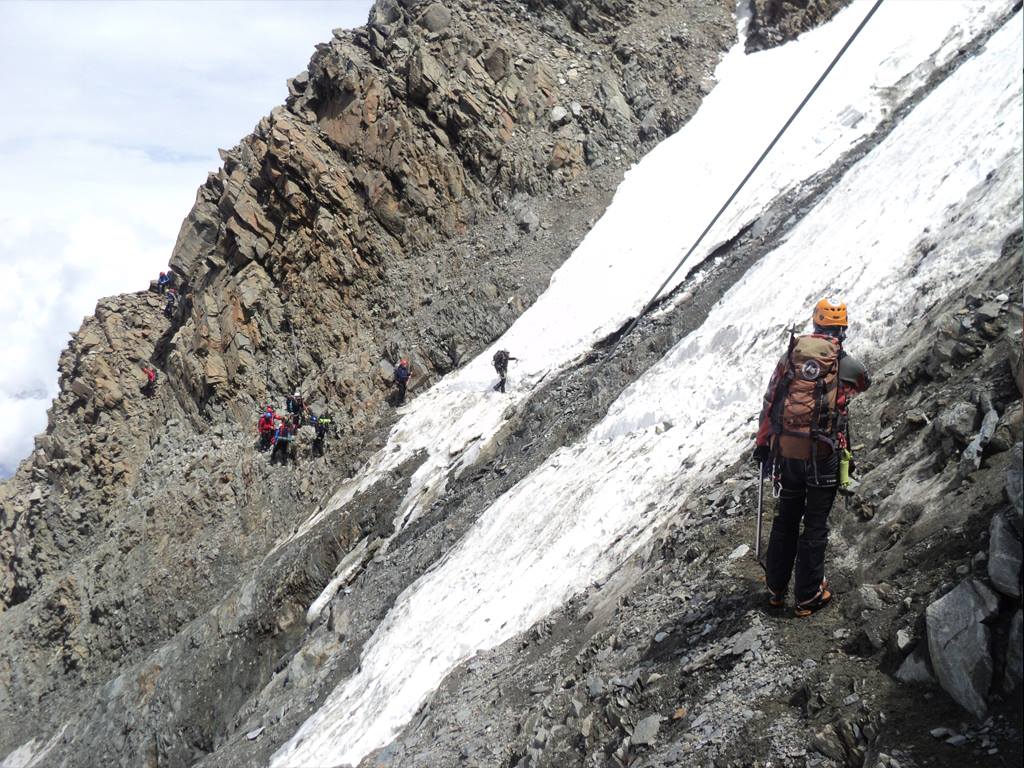
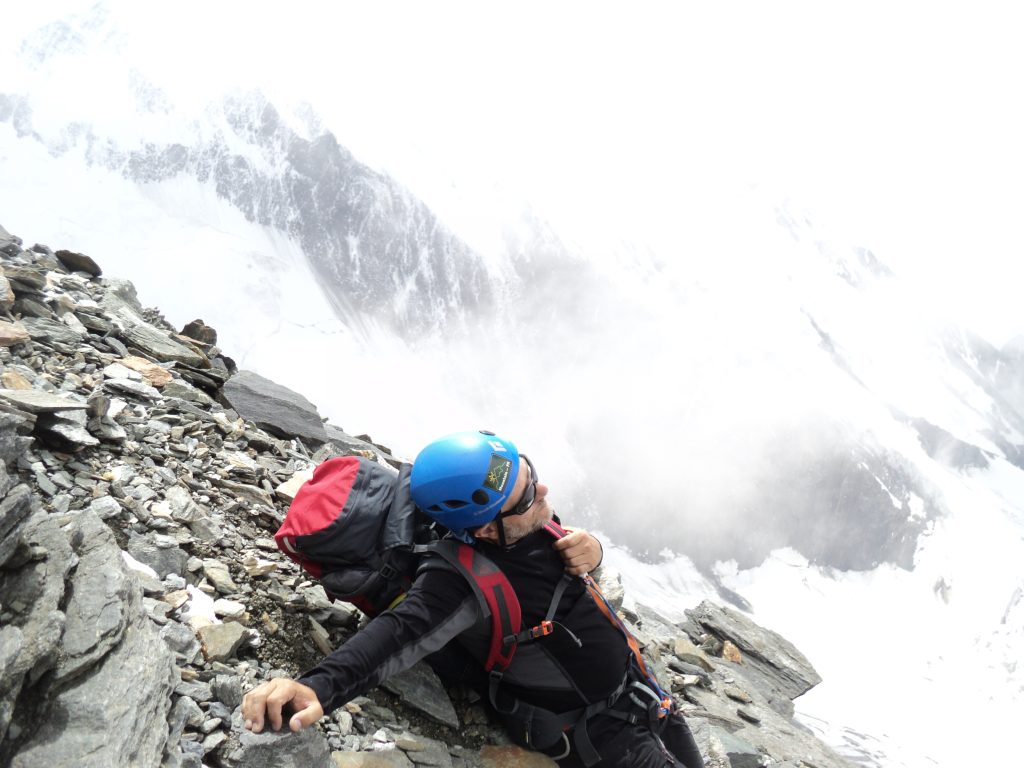
Beyond the couloir, the route to Goûter Hut (3,817 m) involves steep terrain and easy scrambling. A helmet is mandatory.
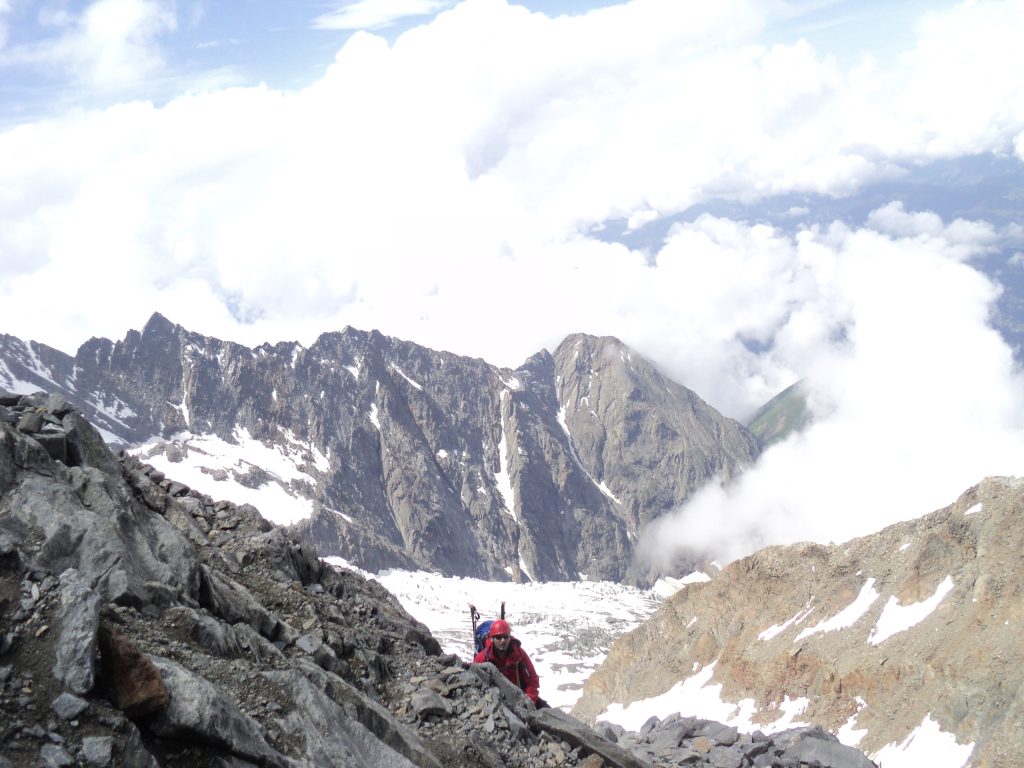
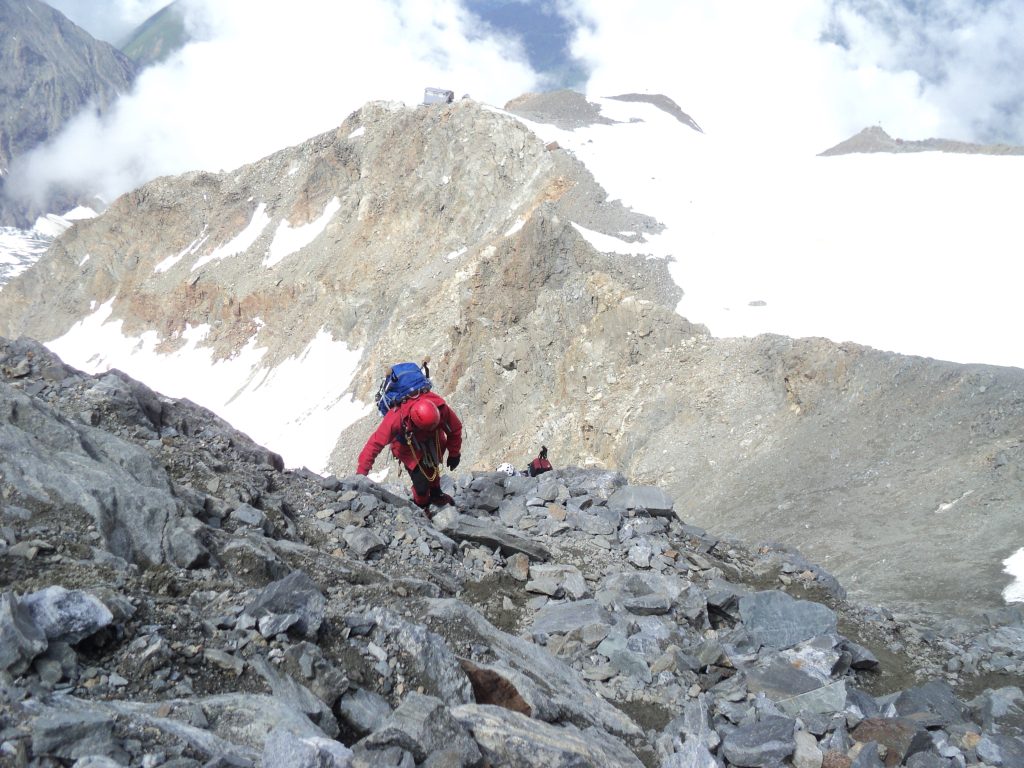
Towards the Gouter Hut
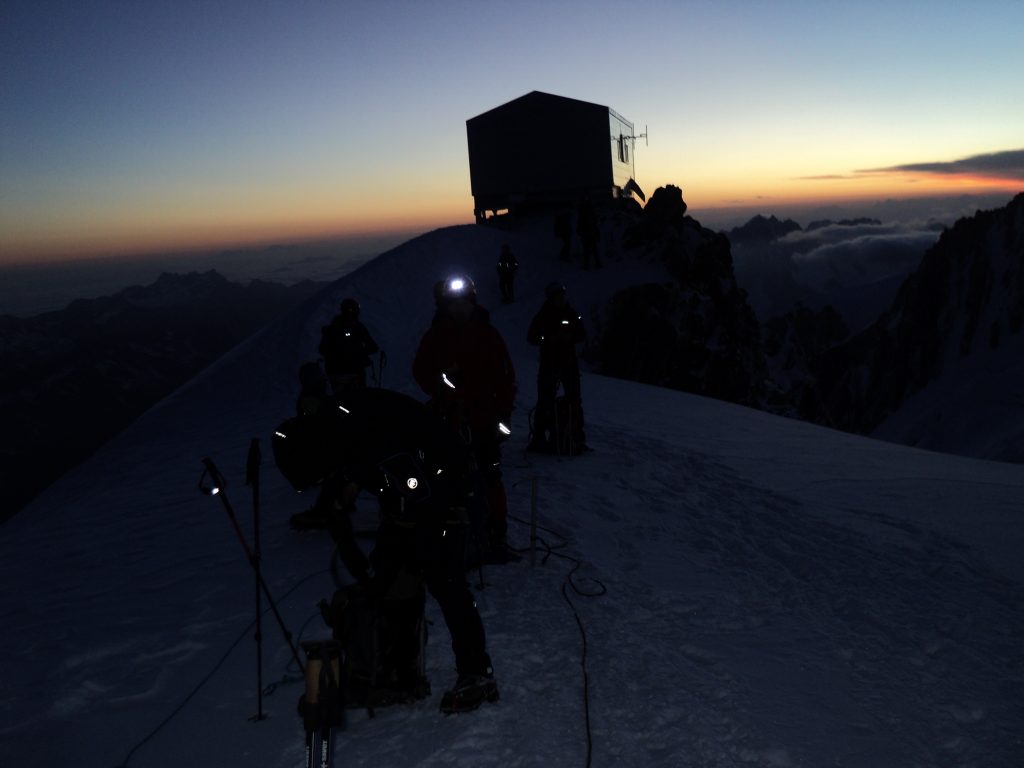
After a short night in the hut, most climbers wake around 1:30 a.m., eat breakfast, gear up, and start climbing by headlamp.
As you gain altitude, every step becomes slower. The air gets thinner, breathing becomes harder, and maintaining a steady pace becomes increasingly important.
For many climbers, the greatest challenge on Mont Blanc isn’t technical difficulty but the combination of altitude, fatigue, and the sheer duration of the climb.
Along the way you’ll pass Vallot Shelter (4,362 m). This shelter is intended strictly for emergencies and should not be used as planned accommodation.
Eventually, dawn breaks over the Alps.
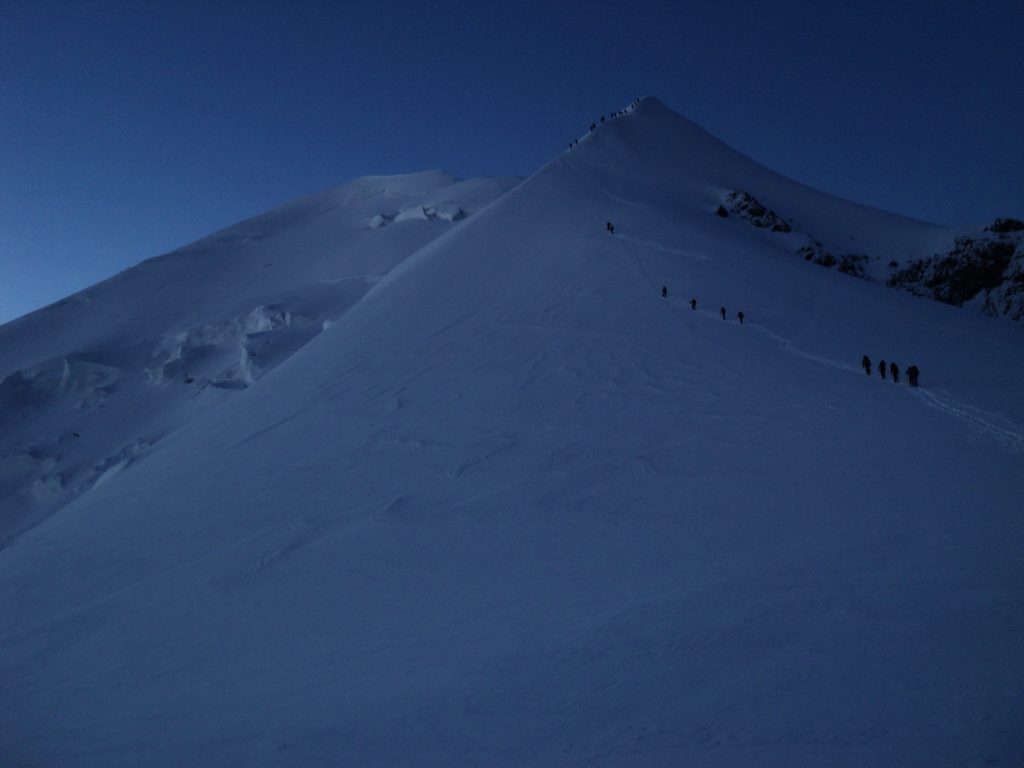
After another few hours of steady effort, the summit ridge comes into view.
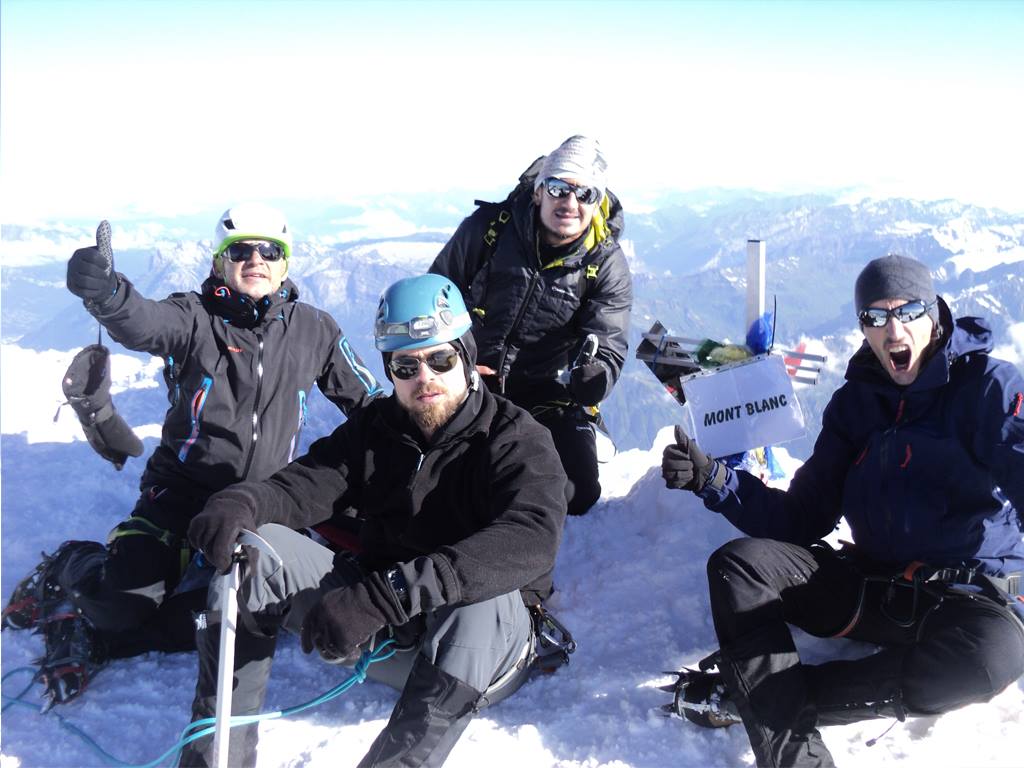
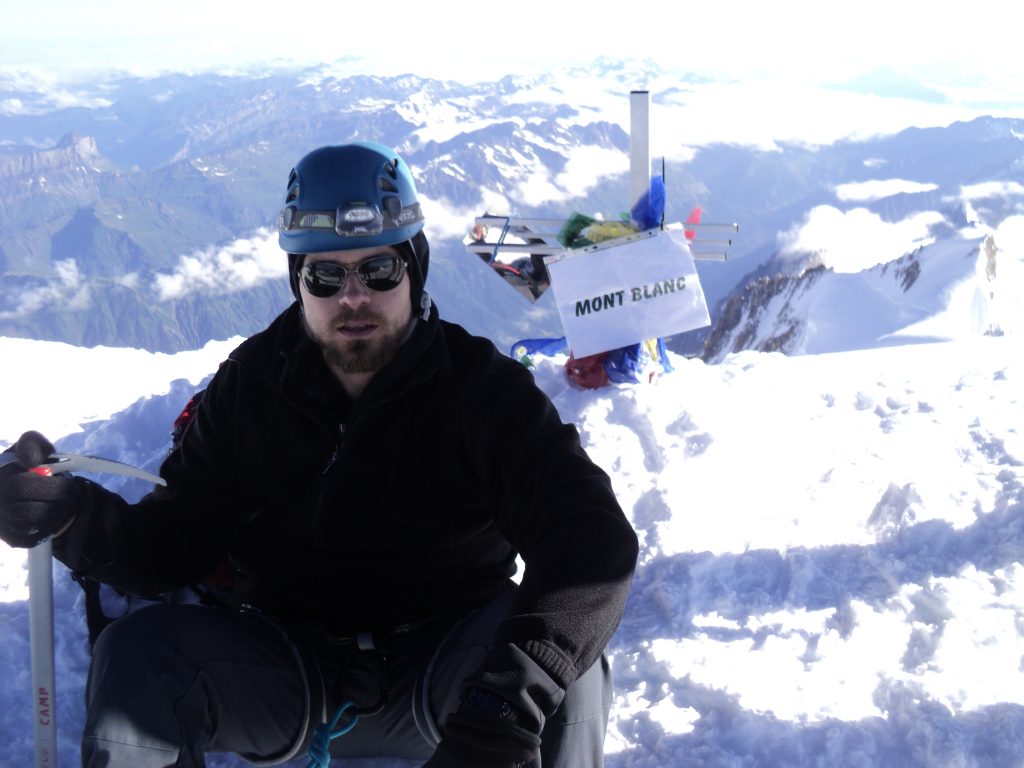
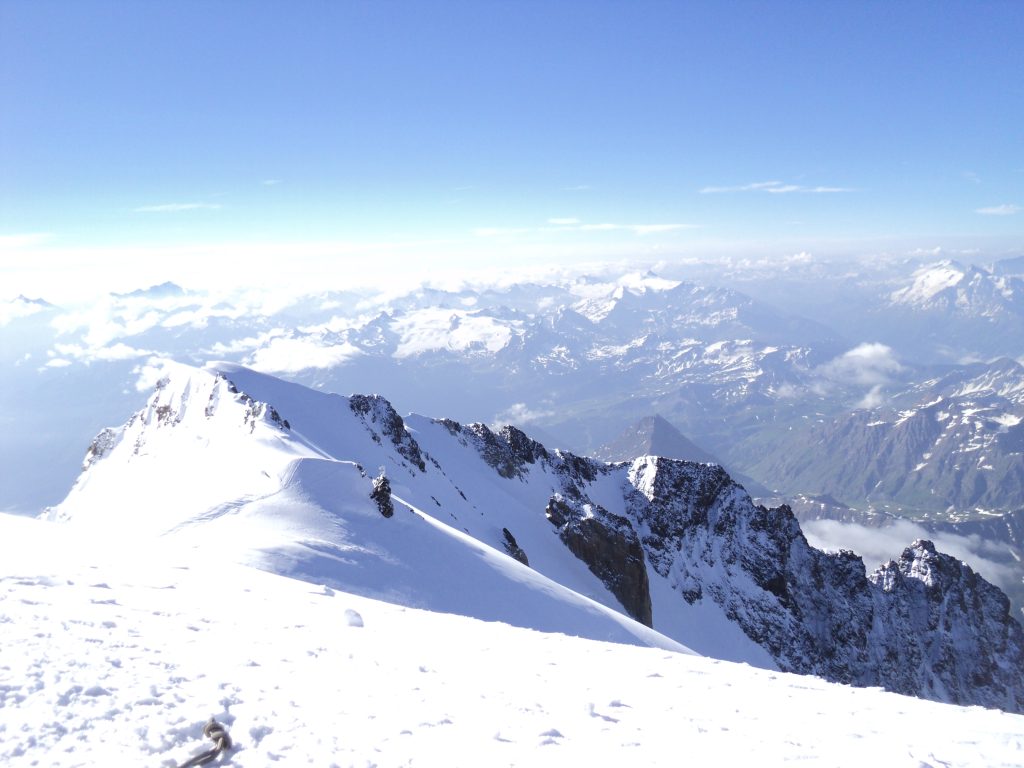
Suddenly, the horizon opens in every direction.
France, Italy, and Switzerland stretch out beneath your feet while endless rows of Alpine peaks fade into the distance.
Typical Schedule
Day 1
- Nid d’Aigle → Tête Rousse Hut: 2.5–3 hours
- Tête Rousse Hut → Goûter Hut: 2.5–3 hours
Total: approximately 6 hours
Day 2
- Goûter Hut → Vallot Shelter: approximately 3 hours
- Vallot Shelter → Mont Blanc Summit: 2–3 hours
- Summit → Nid d’Aigle: 6–7 hours
Total: approximately 12–13 hours



Leave a comment