



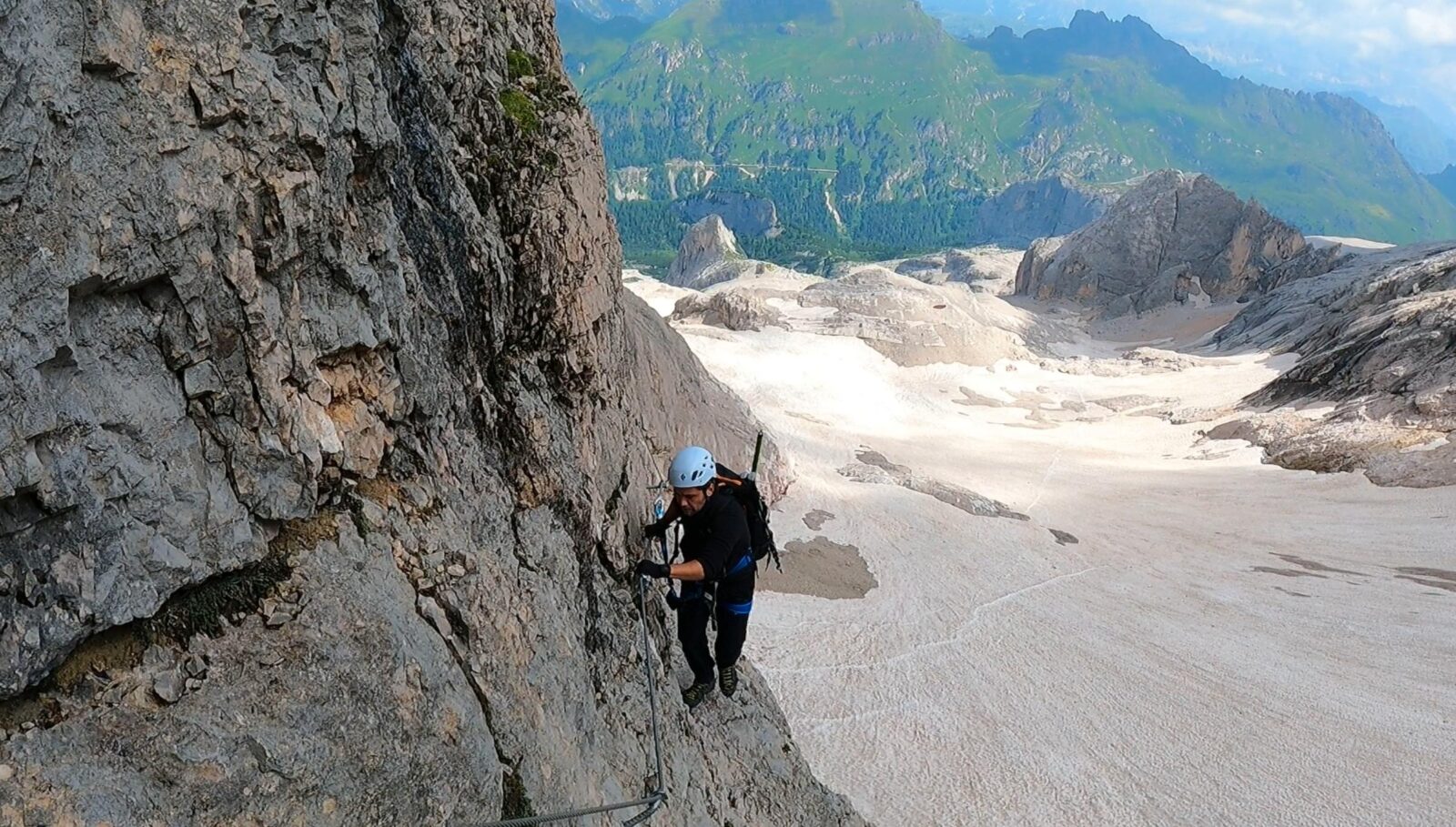
At 3,343 metres, Punta Penia is the highest summit in the Dolomites and one of the most iconic mountaineering objectives in northern Italy.
The altitude, rapidly changing weather, exposed sections and glacier descent make it a serious mountain outing that requires experience and proper preparation.
That depends entirely on the route you choose.
The easiest approach traditionally follows the western ridge, although parts of the route have changed in recent years due to glacier collapse and changing mountain conditions.
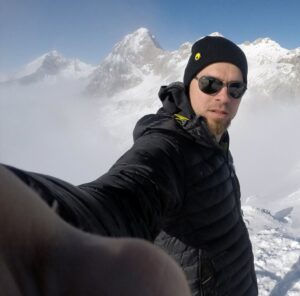
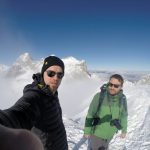
My friend Pavle and I chose to ascend via the ferrata route and descend across the glacier.
This combination offers the complete Dolomite experience:
- Protected climbing sections
- Exposure on steep terrain
- Snow and ice near the summit
- Glacier travel
Climbing Punta Penia
The Dolomites have a unique character.
Unlike the Alps, where glaciers and broad snowfields dominate the landscape, here you are surrounded by towering limestone walls that often look almost unreal.
As soon as Marmolada comes into view, it becomes obvious why it is known as the “Queen of the Dolomites.”
The massif rises high above the surrounding peaks and can be seen from kilometres away.
We started early in the morning to avoid the afternoon thunderstorms that are almost a daily occurrence in the Dolomites during summer.
Route Description and Timing
The starting point is Passo Fedaia (2,057 m).
Follow trail 606. The route is well marked, although occasional fog can make navigation more challenging.
The trail leads towards Pian dei Fiacconi (2,625 m), which takes approximately two hours.
The first section passes relatively quickly, but as you approach the ferrata the terrain becomes noticeably steeper.
Continue following trail 606 towards the ferrata entrance. Expect another hour from Pian dei Fiacconi.
The Via Ferrata to Marmolada’s Summit
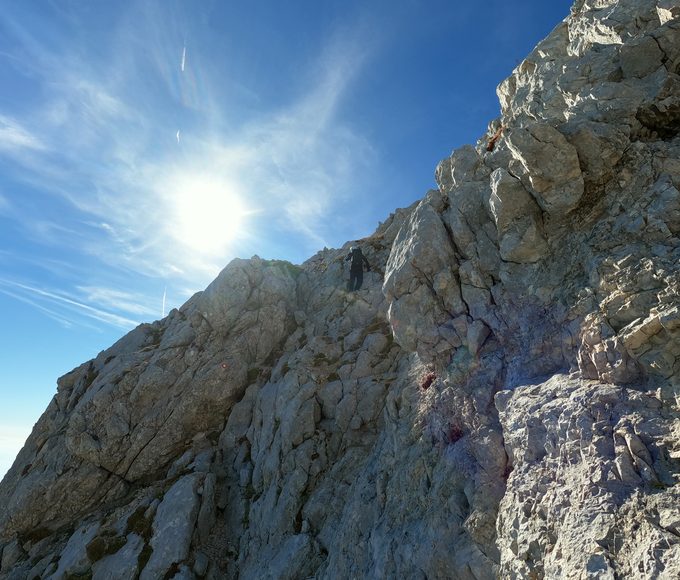
The ferrata is not particularly technical, but several sections are exposed.
Route finding is generally straightforward, and cables are installed where they are most needed.
If you have experience on Slovenian via ferratas, nothing here should come as a major surprise.
What makes Marmolada different is the altitude.
At over 3,000 metres, every climb feels harder than it would lower down in the mountains.
As you gain height, the views become increasingly spectacular.
The Dolomites stretch in every direction and, on a clear day, much of the mountain range is visible.
Allow approximately 1.5 hours to complete the ferrata itself, followed by another 30 minutes to reach the summit.
On the Summit of Marmolada
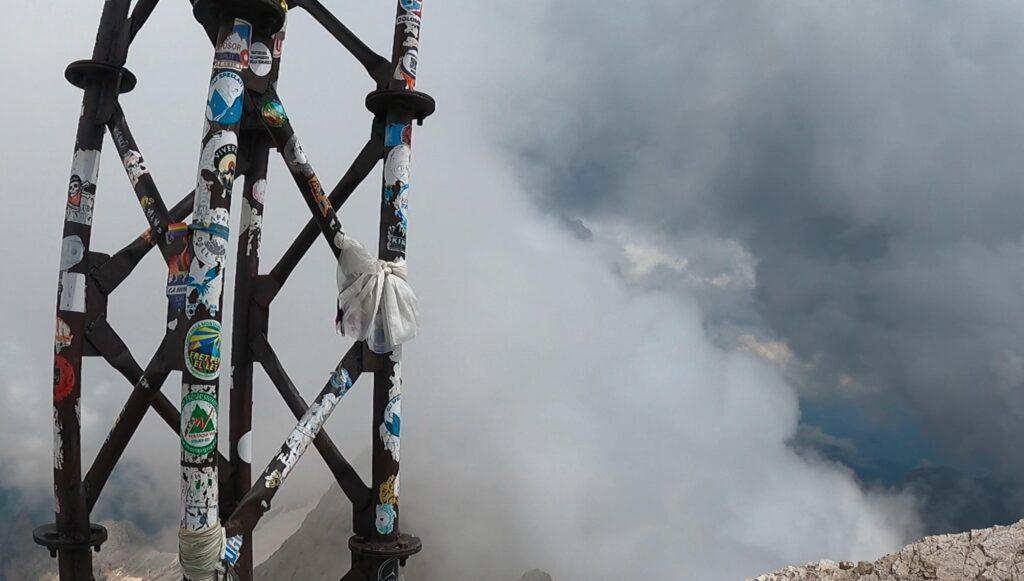
Punta Penia is not just the highest point in the Dolomites.
It is one of those places where you inevitably stay longer than planned.
The view encompasses hundreds of peaks, deep valleys and the dramatic limestone formations that make this part of Italy so famous.
The entire landscape feels like one giant photo opportunity. No matter where you point the camera, the result looks impressive.
A small mountain refuge and summit cross stand on the top.
During good weather, especially on summer weekends, the summit can be surprisingly busy.
Descending Across the Glacier
For me, the descent was perhaps the most interesting part of the day.
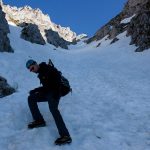
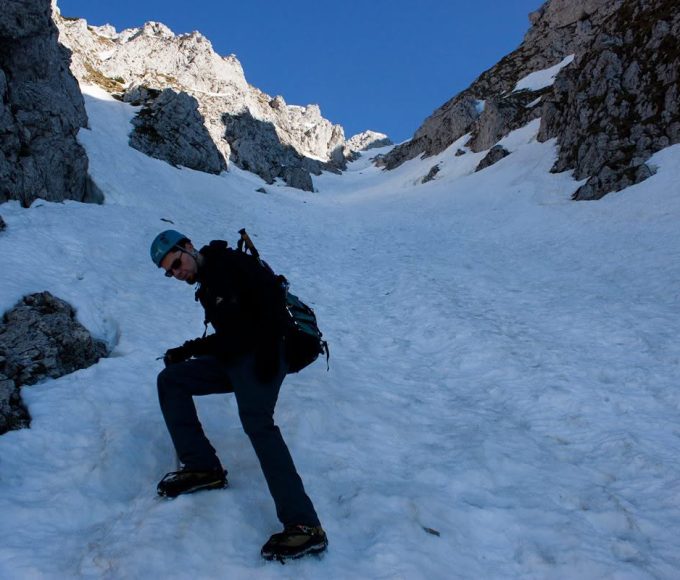
After hours spent on rock, you suddenly find yourself stepping onto a glacier.
Crampons and ice axe become essential once again.
We travelled roped together as a team of two. I left a larger gap between us than usual and tied two knots in the middle of the rope. If Pavle were to fall into a crevasse, the knots would help bite into the snow and reduce the force of the fall.
This technique has both advantages and disadvantages, but it was a reasonable choice for the conditions we encountered that day.
I also carried prusik loops and two ice screws on my harness.
Although Marmolada Glacier has been shrinking rapidly over recent decades, it still provides a genuine alpine atmosphere.
The descent requires concentration, particularly if the snow has softened during the day.
As always on a glacier, conditions must be monitored continuously and your pace adjusted accordingly.
While descending, I could not help thinking about July 2022, when a massive serac collapse killed eleven climbers.
Glaciers appear static, but they are anything but. That thought adds a certain seriousness to the entire experience.
Practical Timing:
Glacier descent: approximately 3–4 hours
Via ferrata ascent: approximately 5–6 hours
How Fit Do You Need to Be?
Good mountain fitness is required.
Not elite alpinist fitness, but definitely solid hiking fitness.
This is a long mountain day involving:
- Significant elevation gain
- Via ferrata climbing
- Altitude above 3,000 metres
- Potential glacier travel
If Triglav feels like a comfortable day hike for you, you are probably on the right track for Marmolada.
When to Climb Marmolada
The best period is usually from late June to early September.
Early in the season, significant snow may still cover the upper mountain.
Later in summer, the glacier becomes harder and more exposed.
As always in the Dolomites, weather plays a major role.
Summer thunderstorms can develop extremely quickly, and a via ferrata is not where you want to be when lightning arrives.
Do You Need a Guide?
If you have no experience with via ferratas or glacier travel, hiring a guide is a good idea.
The ferrata itself is not extremely difficult, but it requires confidence on exposed terrain, is relatively long, and reaches considerable altitude.
The glacier presents a completely different set of hazards:
- Crevasses
- Slippery terrain
- Changing conditions throughout the day
If you are comfortable on via ferratas, know how to use crampons and an ice axe, can rope up properly, perform basic crevasse rescue techniques, and have previous experience in similar terrain, the climb can be completed independently.
If you are comfortable on ferratas but not on glaciers, you can simply descend the same ferrata route you used for the ascent.
Equipment for Punta Penia
- 30–40 litre backpack
- Mountaineering or sturdy hiking boots
- Helmet
- Via ferrata set
- Climbing harness
- Via ferrata gloves
- Warm clothing
- Waterproof jacket
- Sunglasses
- Sunscreen
- Headlamp
- First aid kit
- Sufficient water
For the glacier descent:
- Crampons
- Ice axe
- Rope (depending on conditions and team experience)
- Prusik loops and locking carabiners
- Ice screws
Is Marmolada Worth the Trip?
Absolutely.
Few peaks offer such a variety of mountain experiences in a single day.
A via ferrata, high altitude, glacier travel and breathtaking Dolomite views combine into an outing that stays with you long after returning home.
That is why I consider Punta Penia one of the finest alpine climbs in the Dolomites and a summit that every serious mountain enthusiast should have on their list.
And if a good friend joins you for the adventure, the best part of the day might still be opening a cold beer together down in the valley afterwards.



Leave a comment