



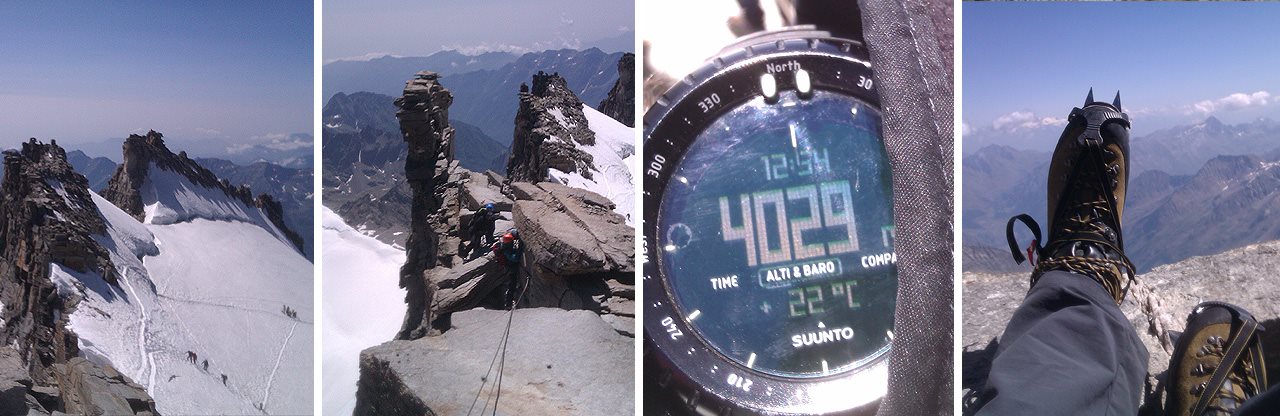
If someone asks me to recommend their first 4,000-metre peak in the Alps, Gran Paradiso is usually one of the first mountains I mention.
Not because it is easy. It isn’t.
But because it offers almost everything people expect from a serious alpine climb: a glacier, crampons, an early alpine start, a mountain hut high above the valley, and a summit above 4,000 metres.
At the same time, it is logistically simpler and technically less demanding than many of the Alps’ more famous peaks.
I climbed Gran Paradiso more than ten years ago. I no longer remember every detail of the ascent, but I remember very clearly the impression it left on me. That is one of the reasons I still recommend it to people looking to take their first serious step into mountaineering.
Gran Paradiso
At 4,061 metres, Gran Paradiso is the highest mountain located entirely within Italy.
Situated in Gran Paradiso National Park, one of Europe’s oldest national parks, it has long been a popular objective for hikers and aspiring mountaineers who want to experience high-altitude climbing without the technical challenges of peaks such as Mont Blanc or the Matterhorn.
That does not mean it is easy.
You are still dealing with a serious mountain, glacier travel, and an altitude exceeding 4,000 metres.
Is Gran Paradiso Difficult?
That depends on what you compare it to.
For experienced mountaineers familiar with glaciers, crampons, and roped travel, Gran Paradiso is not particularly technical.
For someone coming directly from lower mountain ranges, however, it can be a significant challenge.
The main difficulties are:
- Altitude above 4,000 metres
- Glacier travel
- Using crampons and an ice axe
- An early morning summit push after sleeping at altitude
- Rapidly changing alpine weather conditions
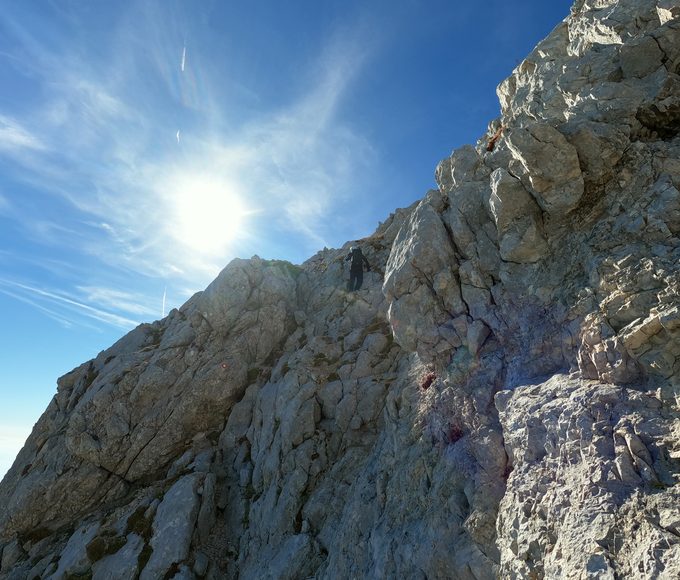
The most technical section comes just below the summit, where a short rocky ridge requires some easy scrambling and careful movement due to the exposure.
Do You Need a Guide?
If you have no experience with glacier travel, the answer is simple: yes.
Although the route itself is not particularly difficult, glaciers always carry objective hazards.
Crevasses, changing conditions, and occasional icy sections require skills that are best learned through training and experience.
If you already know how to travel safely on glaciers, use crampons and an ice axe, and move efficiently while roped up, Gran Paradiso can certainly be climbed independently.
When Should You Climb Gran Paradiso?
The main season generally runs from June through September.
Most ascents take place in July and August, when conditions are usually at their most stable.
If you have flexibility, early September often provides an excellent balance between good weather and smaller crowds.
As always in the Alps, however, the weather has the final say.
The Standard Route
The most popular route starts in the Valsavarenche Valley.
Most climbers begin in the village of Pont and hike to Rifugio Vittorio Emanuele II.
The classic itinerary looks like this:
Pont → Rifugio Vittorio Emanuele II → Gran Paradiso
The climb is usually split into two days.
Day 1
Hike to Rifugio Vittorio Emanuele II.
Located at approximately 2,700 metres, the hut serves as an excellent base for the summit attempt.
Besides shortening summit day, it also helps with acclimatization.
Day 2
Early morning departure for the summit and return to the valley.
As with most alpine climbs, the alarm goes off in the middle of the night.
A headlamp, a quick breakfast, and a line of lights slowly moving towards the glacier are all part of the experience.
The Climb
Above the hut, the route gradually transitions from rocky terrain onto the glacier.
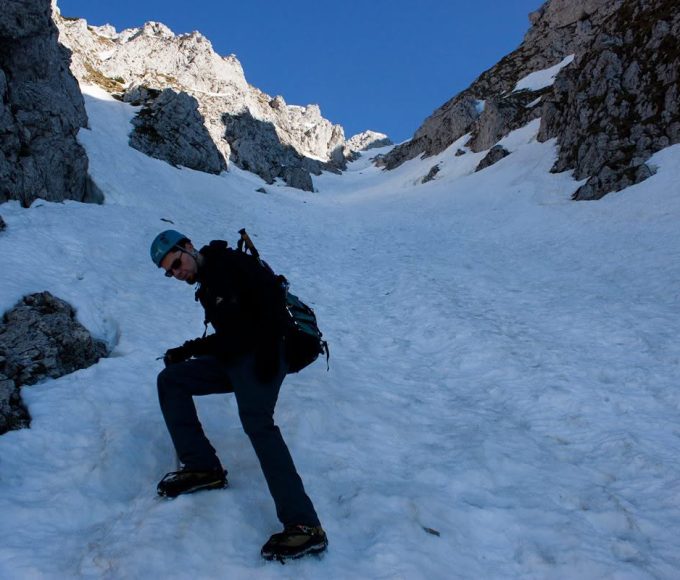
Depending on conditions, crampons may be needed relatively early.
As altitude increases, the pace inevitably slows. Although the climb is not particularly technical, it requires patience and efficient energy management.
For many climbers, the altitude is more challenging than the terrain itself.
Above 4,000 metres, every step feels noticeably harder.
The final section follows a short rocky ridge.
This is often where small queues form, as everyone wants a summit photo beside the famous Madonna statue.
Once on top, the views open across the Western Alps, including distant views of the Mont Blanc massif.
How Fit Do You Need to Be?
Good fitness is important.
You do not need to be an elite athlete, but you should be comfortable spending a long day in the mountains at high altitude.
If a climb such as Triglav feels like a comfortable day hike, you are probably on the right track.
Good preparation peaks include:
- Triglav
- Grintovec
- Mangart
- Jalovec
- Grossglockner
Long hikes with significant elevation gain are particularly useful preparation.
Equipment for Gran Paradiso
- 35–40 litre backpack
- Mountaineering boots or sturdy hiking boots
- Crampons
- Ice axe
- Headlamp
- Climbing harness
- Helmet
- Two or three locking carabiners
- Warm layered clothing
- Waterproof jacket
- Hat and gloves
- Sunglasses
- High-factor sunscreen
- First aid kit
- Emergency bivy blanket
- Thermos flask
- Rope and basic glacier equipment if climbing independently
The exact gear required will depend on conditions and the style of ascent.
Why Is Gran Paradiso Such a Popular First 4,000-Metre Peak?
Because it delivers the complete alpine experience without excessive technical difficulty.
You get:
- A mountain hut
- A pre-dawn alpine start
- Glacier travel
- Crampons and an ice axe
- A summit above 4,000 metres
- Outstanding alpine views
At the same time, you avoid some of the logistical and objective hazards associated with more demanding peaks.
Of course, the mountain still deserves respect.
But for anyone looking to enter the world of 4,000-metre peaks, it is hard to think of a better introduction.



Leave a comment