



Triglav (2,864 m) is not just the highest mountain in Slovenia. It is a national symbol, a peak every Slovenian mountaineer wants to climb at least once, and many locals joke that you’re not a real Slovenian until you’ve stood on its summit.
Is Triglav Difficult?
That depends on the route you choose.
Triglav is not particularly technical for experienced hikers, but it is far from an ordinary mountain walk.
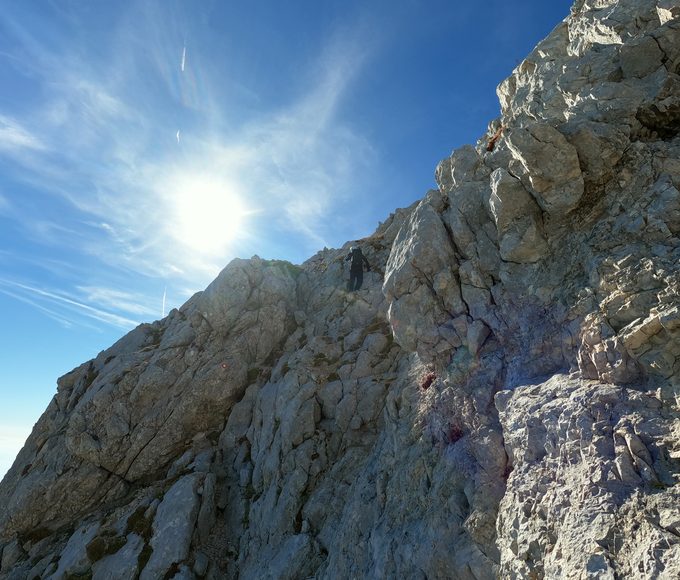
Whether you approach via the Krma Valley, Pokljuka, or the Vrata Valley, the final section involves an exposed ridge, steel cables, and protected scrambling terrain. Technically, it is not a sport via ferrata, but the exposure is significant and many climbers choose to wear a helmet and use a via ferrata set.
I had a helmet and a climbing harness with two slings and locking carabiners instead of a proper ferrata set. Not the smartest choice. Back then, I was younger. Today I’m wiser.
I still don’t own a ferrata set.
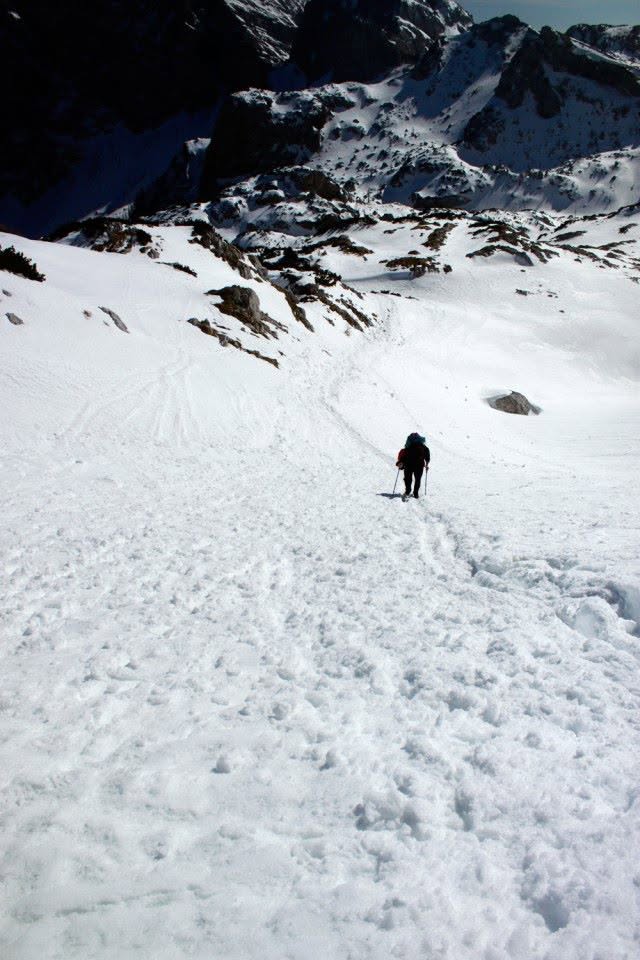
Why Choose the Krma Valley?
The Krma Valley is often considered the easiest and least exposed approach to Triglav.
The ascent is long but technically straightforward until you reach Kredarica and the final ridge to the summit. For that reason, it is one of the most popular routes for first-time visitors to Triglav.
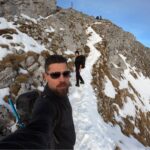
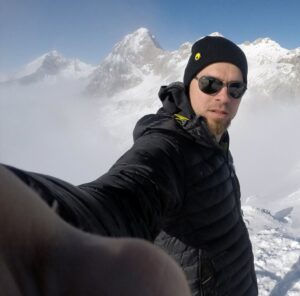
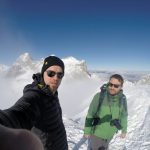
My climbing partner Matija and I split the ascent into two days. Matija also took the photos featured in this article.
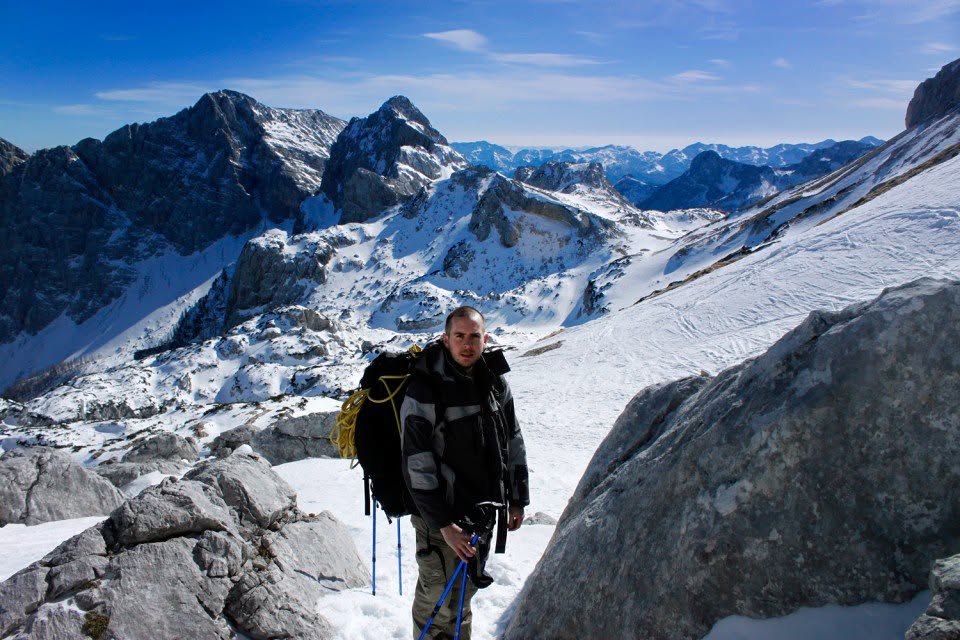
On the first day we climbed to Kredarica, continued to the summit, spent the night at the hut with a few beers, and returned to Zagreb the following day.
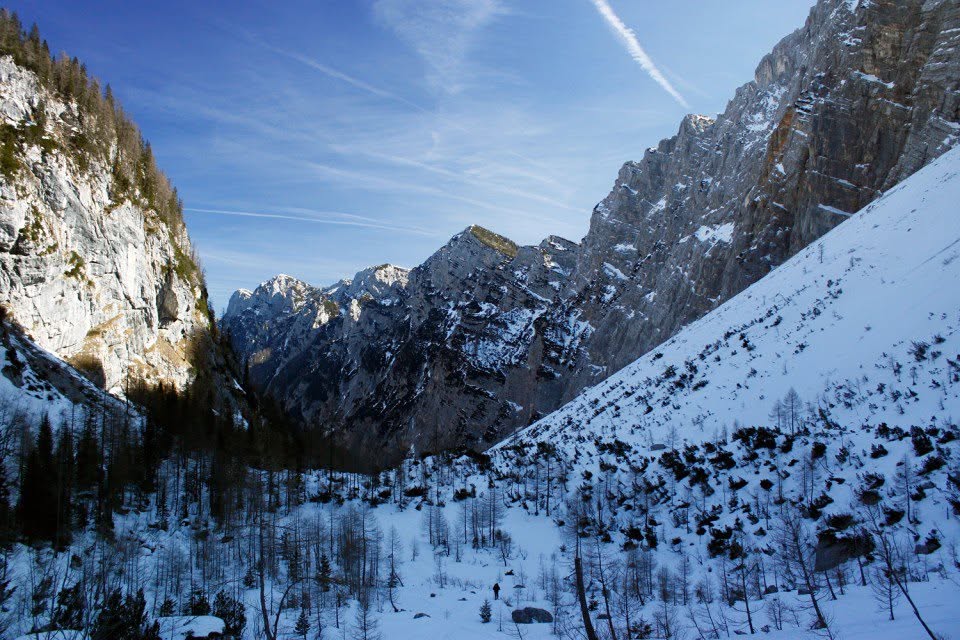
In my opinion, that’s the best option. You have time to enjoy the mountains without rushing, and if the weather is good you can climb the summit on the first day rather than risk a weather change overnight.
Speaking from experience.
Triglav National Park
Triglav stands in the heart of Triglav National Park, the only national park in Slovenia.
The park protects a large part of the Julian Alps, including high mountain peaks, alpine meadows, glacial valleys, rivers, and lakes. It is one of the most beautiful mountain regions in Central Europe and offers countless hiking, climbing, and mountaineering opportunities.
Even if you never reach the summit of Triglav, spending a few days exploring the park is worth the trip.
Krma Valley Triglav Route – Time Estimates
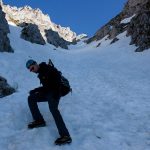
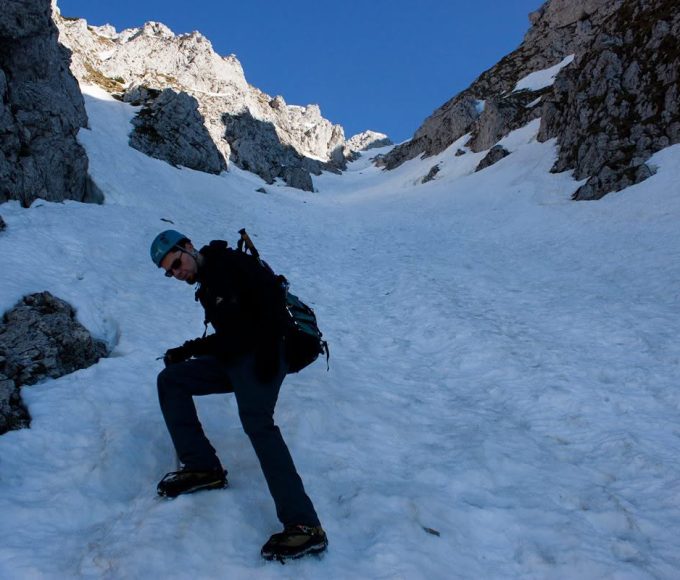
Although it was already spring according to the calendar, there was still plenty of snow on the mountain, even at lower elevations, and conditions around Kredarica were surprisingly cold.
Navigation along the route is straightforward.
Approximate timings:
- Krma Valley – Kredarica: 5–6 hours
- Kredarica – Triglav summit: 1–1.5 hours
- Triglav summit – Kredarica: about 1 hour
- Kredarica – Krma Valley: 4–5 hours
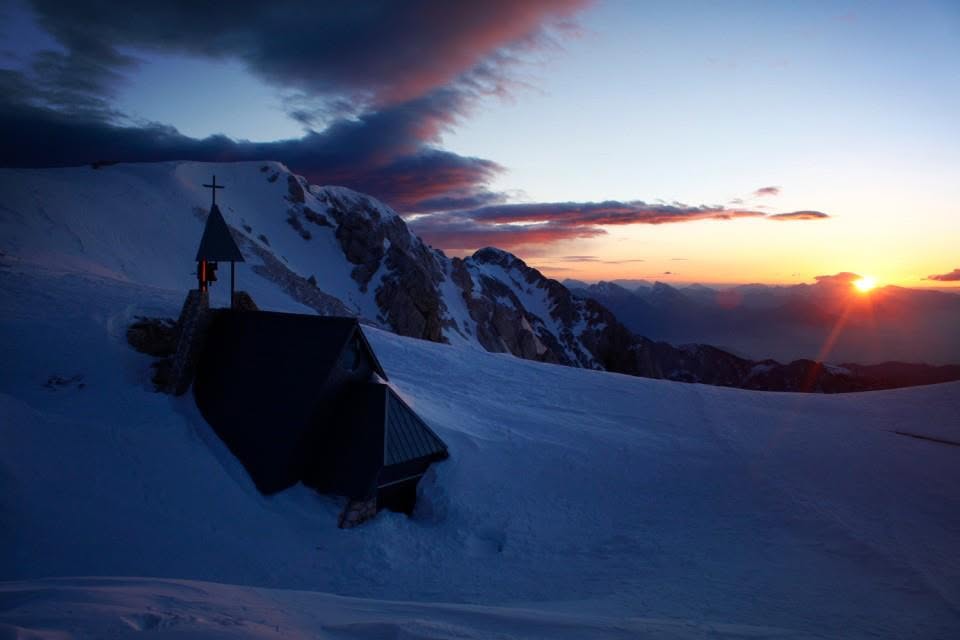
Kredarica hut
Triglavski Dom na Kredarici (2,515 m) is the highest mountain hut in Slovenia and the main gathering point for climbers heading to the summit.
Almost all of the most popular routes eventually converge here.
Evenings at Kredarica have a unique atmosphere.
Mountaineers arrive from Slovenia, Austria, Croatia, and all over Europe. Conversations usually revolve around the weather forecast, current route conditions, future climbing plans, and the eternal question of how many bottles of Zlatorog beer are a good idea.
The smart answer is two.
The realistic answer is six.
Membership in a mountaineering club affiliated with the UIAA usually provides a significant discount on overnight stays in Slovenian mountain huts.
Getting to the Krma Valley
There’s no entrance fee for Triglav National Park itself – access is free, and you can drive straight into the valley. The Krma Valley trailhead is reached via Mojstrana, roughly a 1.5–2 hour drive from Ljubljana or about 2.5–3 hours from Zagreb. There’s a parking area at the start of the trail, but it can fill up on summer weekends, so arriving early is worth it if you’re starting the same day.
Kredarica – Practical Info
- Overnight price: Roughly €20–30 for a shared dorm bed, more for a private room — prices vary by room type and season, so check current rates on triglavskidom.si before you go
- Discount: Members of PZS (Slovenian Alpine Association), HPS (Croatian Mountaineering Association), or any UIAA-affiliated club typically get around 50% off – bring your membership card
- Food and drinks Kredarica prices (20226) – Coffee 4 euros, pasta 16 euros, strudel 8 euros, muesli 8 euros, 2 fried eggs 4 euros, 1 slice of bread 1 euros, beer 9 euros, tea 3 euros, water 1.5 litres 7 euros.
- Booking: Reserve in advance, especially in July and August – Kredarica is the busiest hut in Slovenia and can fill up fast
- Bedding: Not always included in the base price – bringing your own sheet liner saves a bit and is recommended practice. You can buy bedding there for 7 euros.
- Season: Staffed roughly from mid-June to late September; outside that window, only basic emergency accommodation is available
Here is a price for 2 persons with a mountain club discount membership included for Kredarica, August 2026:
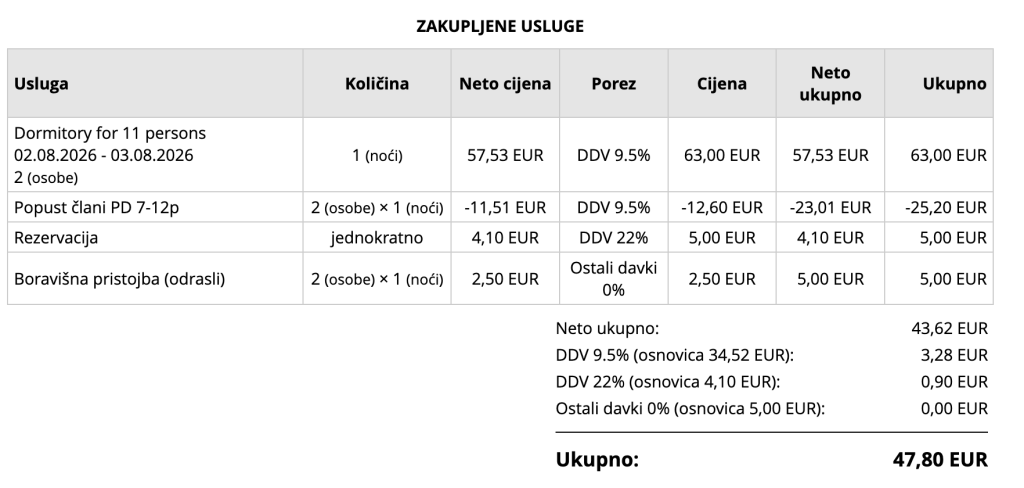
A guide’s note: These prices shift year to year, so treat them as a ballpark rather than gospel – always double-check before you commit to a booking. Also, this is a very popular peak, so overbooking is possible during the peak season.
The Final Ascent to Triglav
The final 300 vertical meters are what make Triglav famous.
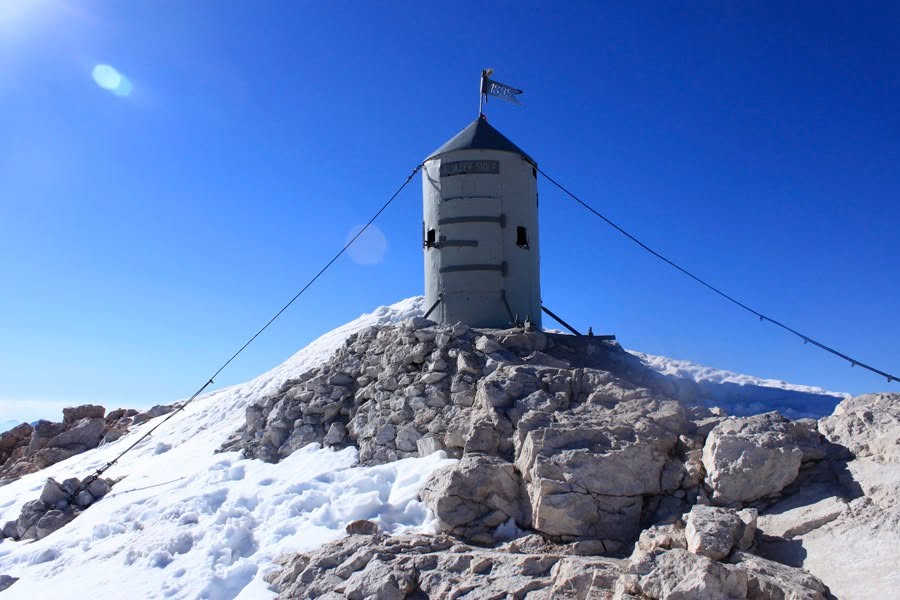
Steel cables, pegs, and an exposed ridge lead to the summit, where you’ll find the iconic Aljaž Tower – a small metal structure that has become one of the symbols of Slovenian mountaineering culture.
Technically, this section is not particularly difficult, but the exposure is serious enough to demand concentration.
Especially when it’s crowded.
And on Triglav, it usually is.
On busy summer weekends, hundreds of climbers may attempt the summit, and short queues on the final ridge are common.
Safety on the final ridge of Triglav ascent
The last 300 meters to the summit are where things can go wrong – not because the climbing is hard, but because of exposure, weather, and crowds all showing up at once.
Weather in the Alps changes fast: Even in June, snow and cold can linger at Kredarica’s altitude, as you already mention from experience. Afternoon thunderstorms are common in summer – if you’re on the exposed ridge when one rolls in, you’re in a genuinely dangerous spot. Aim to summit in the morning and be off the ridge before early afternoon.
Crowding on the cables: On busy weekends, queues form on the steel cable sections. This isn’t just an inconvenience – a bottleneck on exposed terrain means more time exposed to weather and more chance of fatigue-driven mistakes. If you can, go on a weekday or start very early.
Early-season snow: If you’re going in June or even early July, snowfields can still cover sections of the trail – crampons and an ice axe aren’t optional gear in that case, they’re the difference between a solid step and a slide.
Consider mountain rescue insurance
Slovenian mountain rescue (Gorska reševalna zveza Slovenije) can bill for helicopter evacuation if you’re not covered. Membership in an Alpenverein club (DAV, ÖAV, or similar UIAA-affiliated associations) typically includes worldwide mountain rescue and search cost coverage as part of the membership – worth having before you’re on a route like this, not after something goes wrong. It’s a small yearly cost for real peace of mind on exposed terrain.
A guide’s note: Triglav gets climbed by a lot of people who are fit but inexperienced with exposure. Being comfortable on flat trails doesn’t automatically mean being comfortable on cable-assisted ridge terrain – if you’re unsure, that’s exactly the kind of thing worth testing on an easier via ferrata first.
Other Popular Routes to Triglav
One of Triglav’s strengths is the variety of approaches.
Krma Valley
The easiest and most popular approach. Long but relatively straightforward until the final summit section.
Čez Prag
A classic route from the Vrata Valley. Steeper, more interesting, and with more protected sections. Many hikers consider it the most scenic route to Triglav. In my opinion, Tominškova takes that name (not counting the alpinist routes). Around 6 hours from Aljažev dom in the Vrata valley – if you are fast. It is actually more like 8 hours on average.
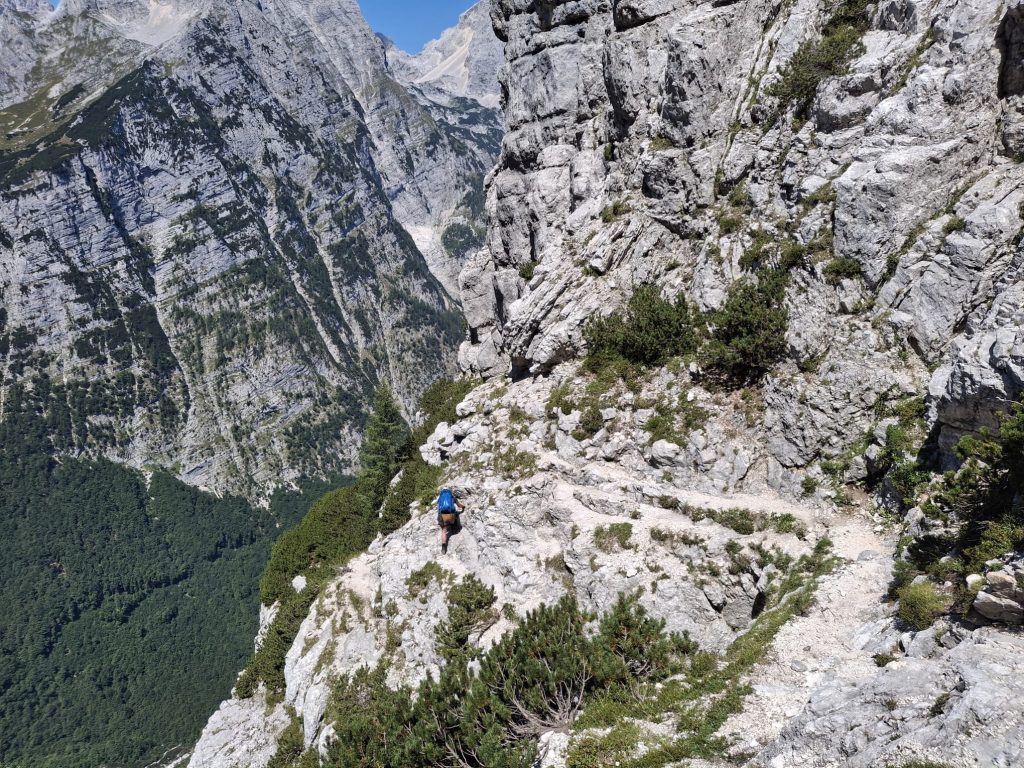
Tominškova Pot
Also starting in the Vrata Valley. Slightly more demanding than the Prag route and passing through highly exposed terrain. Around 6 hours from Aljažev dom in the Vrata valley – if you are fast. It is actually more like 8 hours on average.
Pokljuka
A longer but very pleasant approach through alpine meadows, mountain huts, and high mountain plateaus.
Slovenska Route and Nemška Route
If you’ve heard of the Slovenska Route or the Nemška Route, it’s important to know that these are not hiking trails.
They are classic alpine climbing routes in Triglav’s famous north face.
The Slovenska Route is one of the most iconic alpine climbs in Slovenia, while the Nemška Route follows another historic line through the wall.
Neither should be considered an option for a first ascent of Triglav unless you already have alpine climbing experience.
How Fit Do You Need to Be?
Fairly fit.
If you’re attempting Triglav as a one-day climb, expect a long day with significant elevation gain.
You’ll need solid mountain fitness.
Splitting the climb into two days via Kredarica makes the experience much more enjoyable.
Good preparation peaks include:
- Grintovec
- Mangart
- Jalovec
- Prisojnik
Gear for Climbing Triglav
- 30–40 L backpack
- Hiking boots
- Helmet
- Via ferrata set (recommended)
- Warm jacket and spare clothing
- Rain jacket
- Sunglasses
- Sunscreen
- Headlamp
- Food and water
- Trekking poles (optional but recommended)
If snow remains on the route:
- Crampons
- Ice axe
- Additional equipment depending on conditions
When Is the Best Time to Climb Triglav?
The main climbing season runs from June to September.
July and August are the busiest months, and large crowds can form on the most popular routes, especially on the final ridge.
Early in the season, snowfields often remain on higher sections of the mountain, making crampons and an ice axe necessary even on standard routes.
As always in the Alps, conditions can change quickly, so checking the forecast before departure is essential.
Is Triglav Worth Climbing?
Absolutely.
Some mountains are famous because they’re difficult.
Others because they’re beautiful.
Triglav manages to be both.
And yes, the panorama from the summit is every bit as good as people say.



Leave a comment