



Every summer, the same story repeats: a rescue team gets called out because someone decided a coastal hike looked “easy enough” to do straight from the beach – flip-flops, no water, no idea what they were getting into.
Here’s the twist: it’s not just tourists. Croatia’s Mountain Rescue Service (HGSS) runs 3 to 4 interventions a day during summer, and many of the people they rescue are actually Croatians themselves, not foreign visitors. The “tourist in flip-flops” stereotype isn’t wrong – it happens – but it’s not the whole picture.
The mountain doesn’t care where you’re from. It punishes bad preparation equally.
So if you’re planning to hike in Croatia this summer – whether it’s a short coastal trail or something more serious – here’s what you actually need to know.
This Isn’t Hypothetical
While writing this, a fresh example landed in the news: eight members of Croatia’s Mountain Rescue Service spent last night searching for a foreign tourist who got lost descending from Sveti Ilija, Biokovo’s highest peak, at 1,642 meters.
The call came in around 9:30pm. Rescuers reached the person after 1am, and the whole operation didn’t wrap up until 4:30am.
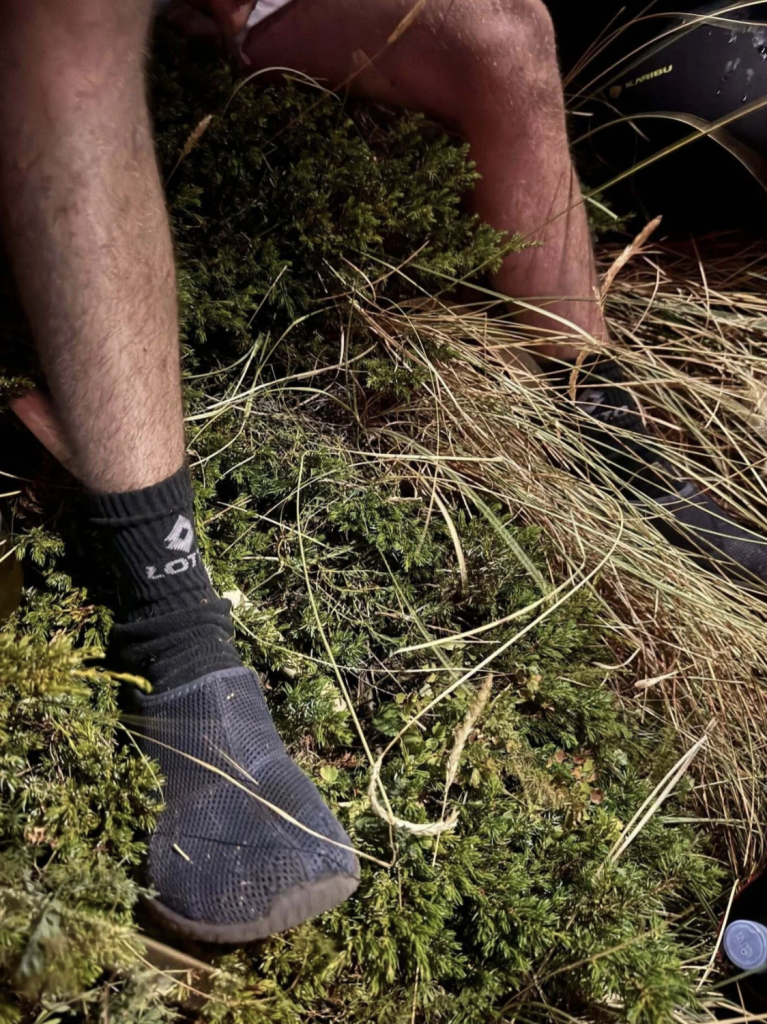
The rescue team’s own comment afterward was blunt: too many of their call-outs this summer look exactly the same – no water, no headlamp, no proper shoes, and a route or timeline the person clearly hadn’t thought through.
A similar case happened just days earlier on the same mountain: a tourist in sandals ran out of water and energy at 1,050 meters and had to be walked down by rescuers after a multi-hour search.
None of this is rare.
It’s the pattern.
Croatia’s Mountains Are Deceptive
From the coast, most of Croatia’s mountains look like gentle green hills. Biokovo, Velebit, the trails above Dubrovnik or Split – they seem close, short, and harmless when you’re looking up at them from a beach towel.
They’re not.
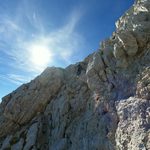
Terrain here is often steep, rocky, and exposed, with very little shade. Temperatures at sea level might be a pleasant 30°C, but on exposed limestone with no wind, it can feel brutal – and there’s often no water source once you start climbing.
A Hiking Trail Is Still a Mountain Trail
One of the biggest mistakes visitors make is assuming that a trail is easy because it starts close to the coast.
In Croatia, you can go from sea level to serious mountain terrain surprisingly quickly. A trail that starts ten minutes from the beach can involve hundreds of metres of elevation gain, loose limestone, exposed rock and long stretches without shade.
If the route is marked as a mountain trail, treat it like one – even if you can see the Adriatic from the trailhead.
How Difficult Is Hiking in Croatia?
It depends enormously on the route.
There are easy walks that take an hour or two, but there are also steep mountain routes that require good fitness, sure footing and previous hiking experience.
Don’t judge difficulty by distance alone. A 6-kilometre hike with 600 metres of elevation gain on exposed limestone can be considerably harder than a 12-kilometre trail through a forest.
Before setting out, check:
- total distance
- elevation gain
- estimated hiking time
- terrain and exposure
- whether there are water sources
- weather conditions
And if you’re unsure, choose the easier route.
There’s no prize for turning a holiday hike into an emergency call.
Northern Velebit National Park hiking video:
What to Actually Bring for hiking in Croatia (Summer Edition)
You don’t need alpine gear for most tourist-accessible trails, but you do need more than what you’d wear to the beach.
Footwear: Closed hiking shoes or trail runners with real grip. Flip-flops, sandals, and city sneakers are the single biggest cause of injuries on rocky terrain – a twisted ankle two hours from the trailhead is a very different problem than a twisted ankle in a parking lot.
Water: More than you think. For a summer half-day hike, 1.5–2 liters per person is a reasonable starting point, but you may need considerably more in extreme heat or on exposed routes. There is rarely a place to refill once you’re on the trail.
Sun protection: Hat, sunscreen, sunglasses. Croatian limestone reflects heat and light – you’ll burn faster than you expect, even in light cloud cover.
A real trail map or offline GPS app: Don’t rely on phone signal – coverage disappears fast once you’re behind a ridge. Croatia’s hiking trails are marked with the red-and-white HPS (Hrvatski planinarski savez) circle markers painted on rocks and trees; learn to recognize them before you go.
A light layer: Even in summer, weather on exposed ridges can shift fast – wind and sudden storms are common, especially in the afternoon.
A charged phone and the number 112: Croatia’s emergency number works for mountain rescue too. If something goes wrong, being able to contact emergency services and communicate your location can make a huge difference.
If Something Goes Wrong
If you get into trouble in the mountains, call 112 and give rescuers your location as accurately as possible.
Don’t keep moving if you’re lost unless you know exactly where you’re going. Find a safe place, conserve your phone battery and communicate with rescuers.
If you use an offline hiking app, your GPS position can be extremely useful when describing where you are.
And remember: calling for help early is always better than waiting until you’re exhausted, dehydrated or caught by darkness.
Timing Matters More Than You Think
Start early.
Not “after breakfast” early – actually early, ideally before 8 or 9am in peak summer.
The combination of midday heat and zero shade on exposed trails is what turns a manageable hike into a real emergency.
If you’re not back or close to done by early-to-mid afternoon, you started too late.
Risnjak National Park hiking video:
Tell Someone Your Plan
This sounds obvious, but it’s one of the most common failures.
Tell someone – a hotel reception, a friend, anyone – which trail you’re doing and roughly when you expect to be back.
Rescue teams lose critical time when nobody knows where to even start looking.
Popular Doesn’t Mean Easy
Some of the most beautiful hikes in Croatia – sections of Biokovo, parts of Velebit, the trails around Paklenica – are also where rescue call-outs happen most often, precisely because they’re popular and accessible enough that people underestimate them.
A trail being well-known or frequently recommended online doesn’t mean it’s beginner-friendly.
Check difficulty, elevation gain, and estimated time before you commit – not after you’re halfway up.
Gorski kotar hiking video:
Respect the locals
This is what I do when I travel somewhere. If you get injured in the mountains and you need help, by all means, call 112. But if you get lost because you are unprepared, or are missing water/food supplies, please remember that people you are calling for help are volunteers, and they are taking time away from their families and risking injury themselves while searching for you.
In the Alps, a helicopter rescue will cost you 15 000 euros. Think about that.
The Bottom Line
None of this is meant to scare you off – Croatia’s trails are genuinely beautiful, and hiking here is one of the best ways to see the country beyond the coastline.
The mountains just ask for a bit more respect than the beach does.
Bring proper shoes, bring water, start early, tell someone your plan, and check the weather.
That’s really most of it.
The rest is just enjoying the view – from your own two feet, not from a stretcher.
If you’re planning a specific hike in Croatia and want route-specific advice, drop a comment – happy to help.
Frequently Asked Questions
Is hiking in Croatia safe?
Yes, hiking in Croatia can be very safe when you choose a route appropriate for your experience and prepare properly.
The main problems usually come from underestimating the terrain, heat, distance, elevation gain or weather rather than from the trails themselves.
What should I wear hiking in Croatia?
For most mountain trails, wear proper hiking shoes or trail runners with good grip. Avoid flip-flops, sandals and smooth-soled shoes, especially on rocky limestone terrain.
In summer, lightweight clothing, sun protection and a light additional layer are useful. More demanding mountain routes may require additional equipment depending on the terrain and conditions.
How much water do I need for hiking in Croatia?
For a summer half-day hike, 2 liters per person is a minimum, and exposed routes and high temperatures can require considerably more.
Always check whether reliable water sources are available on your specific route. On many Croatian mountain trails, there is nowhere to refill during summer months.
Can you hike in Croatia in summer?
Absolutely. Summer is a popular time for hiking in Croatia, but heat can make exposed routes significantly more demanding.
Starting early in the morning is one of the easiest ways to make a summer hike safer and more enjoyable. Also, bring a hat and sunscreen.
For longer or more exposed routes, check the weather forecast and plan to avoid the hottest part of the day.
Are Croatian hiking trails well marked?
Many Croatian mountain trails are well marked with the traditional red-and-white HPS trail markers.
However, good markings don’t replace navigation skills. Carry a map or offline GPS app and don’t assume that phone reception will be available everywhere.
What should I do if I get lost while hiking in Croatia?
If you’re unsure where you are, stop rather than continuing randomly.
Try to determine your location using an offline GPS or map. If you are in danger or cannot safely find your way back, call 112 and provide your location as accurately as possible.
Stay in a safe location, conserve your phone battery and follow instructions from emergency services.
What is the emergency number for hiking accidents in Croatia?
The emergency number in Croatia is 112.
It can be used to contact emergency services, including assistance for people in trouble in the mountains.
If possible, provide your exact GPS location, the name of the trail or mountain, the number of people in your group and the nature of the problem.
If you’re planning a hike in Croatia and aren’t sure whether a particular route is suitable for you, feel free to leave a comment or get in touch. A little planning before you leave the beach is usually much easier than explaining to Croatian Mountain Rescue Service why you thought flip-flops were a good idea.





Leave a comment